
The college sports world is changing fast. It’s like a map turned into a Picasso painting after too much drinking.
The Pac-12 broke up like a Shakespearean drama. Its members were left looking for a new home.
The Atlantic Coast Conference, known for its southern roots, made a bold move. It welcomed the University of California and Stanford, two big names from the West.
This isn’t just a simple change. It’s a cultural transplant. We’re mixing southern charm with West Coast tech vibes. ACC football Saturdays will never be the same.
Imagine Berkeley’s radicals and Silicon Valley’s elite joining a party known for southern hospitality. This cross-country shift is both strange and exciting.
Timeline of the move and what changed for 2024–25
If you blinked in August 2023, you missed the Pac-12 conference’s collapse. USC, UCLA, Oregon, and Washington left for the Big Ten. This left California and Stanford as the only ones left.
The ACC’s exploration of adding Cal and Stanford was urgent. It started with late-night calls in early August. The UC Board of Regents met quickly to discuss staying in sports.
This wasn’t a smooth transition. It was a catapult launch. The announcement changed everything for the 2024–25 year. The Pac-12’s familiar afternoons were replaced by a new reality.
So, what changed with the Stanford to ACC deal? Everything and nothing. The mascots stayed the same, but the map changed. Here’s what shifted:
- Opponents: Now facing Miami and Chapel Hill instead of Tucson and Pullman.
- Kickoffs: Adjusting to “ACC After Dark” slots from the West Coast.
- Culture: Moving from Pac-12 tradition to the ACC’s basketball-first culture.
The 2024–25 season is a new chapter. It’s a different book. Athletes and coaches must adapt to new time zones, climates, and rivalries. The era of West Coast isolation is over. The great college sports realignment of the 2020s ended with California schools in the spotlight.
Revenue, media windows, and late‑night kickoffs
If college sports conferences were traded on Wall Street, the ACC just bought a long-term call option on Pacific Standard Time. Let’s cut through the school-spirit platitudes. This move is a cold, calculated financial hedge.
The deal’s fine print reads like a corporate merger. Cal is basically on a revenue-sharing payment plan. They won’t get a full ACC member share upfront. Instead, they’ll contribute a portion of their media rights money back to the conference, with those payments decreasing over ten years. It’s the athletic equivalent of buying into an exclusive club with installments.
Where does the shortfall go? Enter the University of California regents. Their terms for UCLA’s Big Ten departure likely mean the Bruins will help subsidize Cal’s transition. Think of it as a sibling tax. For the ACC, this isn’t charity. It’s an insurance premium against future defections and a direct tap into the massive California media market.
The real prize is the ACC Network. Adding two flagship California universities extends its cable footprint dramatically. More households mean higher carriage fees and greater overall value when the next TV rights deal is negotiated. The conference isn’t just adding teams; it’s annexing time zones.
This brings us to the consumer-facing product: “ACC After Dark.” Get ready for football kickoffs at 10:30 PM Eastern. For East Coast fans, this is either a dream or a nightmare. Imagine watching a fourth-quarter rally in your pajamas, fueled by caffeine and existential dread. For the networks, it’s pure gold—a live, exclusive window when nothing else is on.
The logistics of West Coast travel for teams are a real cost. But the conference calculates that the new late-night TV inventory will more than offset those expenses. It’s a bet that fans will trade sleep for content.
So, what’s the bottom line? The ACC is diversifying its portfolio. The revenue streams are complex, but the goal is simple: survival in an arms race. This isn’t about tradition. It’s about future-proofing a league in a volatile landscape. The next time you see a Stanford game starting at 7:30 PM Pacific, remember—you’re not just watching a contest. You’re watching a financial instrument play out in real time.
Travel/time‑zone logistics for Olympic and major sports
Forget X’s and O’s; the most complex playbook in the ACC now belongs to the travel coordinators for Cal and Stanford. We’re not just talking about moving a football team across state lines. This is a full-scale logistical invasion, where every swimmer, tennis player, and soccer star becomes a pawn in a high-stakes game of continental chess.
The closest ACC opponent is over 2,200 miles from the Bay Area. To put that in perspective, a flight from San Francisco to Miami takes longer than a flight from New York to London. The league has pledged to “minimize travel burdens.” It’s a nice sentiment, like promising to minimize homework. The reality is a brutal new geography.
The proposed workaround is clever, I’ll give them that. Using Dallas—home to fellow newcomer SMU—as a neutral-site hub for non-revenue sports. The idea is to cluster games, so a softball team might fly to Texas and play three different ACC schools in one trip. On paper, it’s an athletic DMZ. In practice, it turns every away game into a multi-day odyssey.
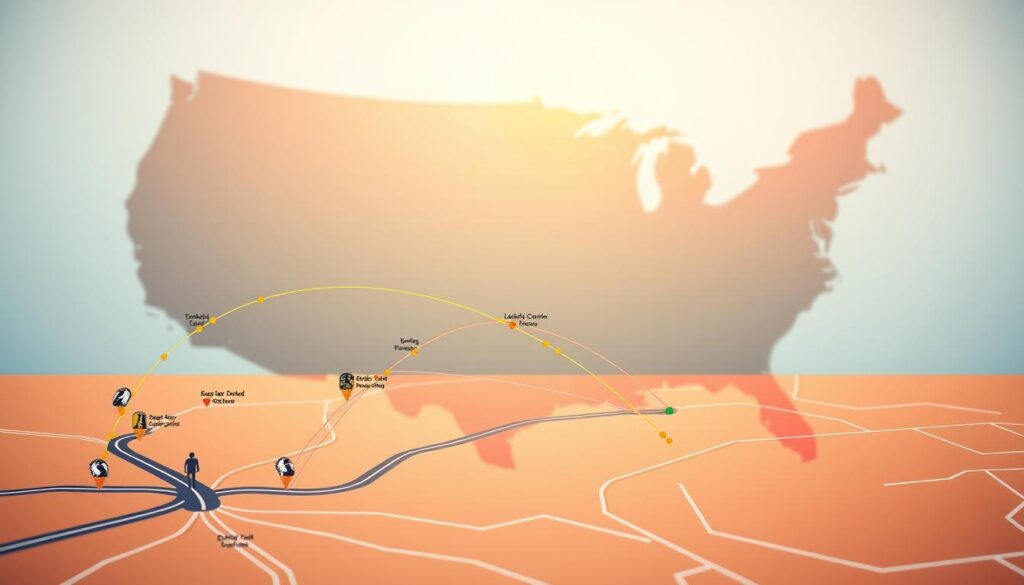
Let’s get analytical. The impact isn’t uniform across all sports. Football and men’s basketball will charter flights and be treated like pros. The real strain falls on the so-called Olympic sports. Imagine a Cal women’s soccer team playing a Friday night game in North Carolina, then needing to be back for a Monday class. The jet lag alone is a formidable opponent.
The new ACC scheduling reality requires a spreadsheet more complex than a tax return. Here’s a breakdown of the travel calculus facing different sports:
| Sport | Typical Road Trip Distance | Time Zone Shift | Dallas Hub Benefit |
|---|---|---|---|
| Football | Cross-country (2,200+ mi) | 3 hours (PT to ET) | Low – Few games, charters |
| Basketball | Cross-country | 3 hours | Medium – Conference tournaments help |
| Soccer/Volleyball | Cross-country cluster | 2-3 hours | High – Could use hub for multiple matches |
| Softball/Baseball | Cross-country series | 3 hours | High – Weekend series ideal for hub |
| Swimming/Tennis | Cross-country for meets | 3 hours | Medium – Limited meet schedule |
As the table shows, the hub model is a lifeline for sports with frequent, multi-game weekends. But it’s not a magic bullet. You’re asking 19-year-olds to adapt to a three-hour time shift, different climates, and the general disorientation of living out of a suitcase. The league’s ACC scheduling pledge will be tested not in boardrooms, but in the weary eyes of a rower staring at a 4 a.m. wake-up call in Boston.
So, what’s the final score? The Dallas idea is a pragmatic, if imperfect, solution. It’s a recognition that sending a lacrosse team from Berkeley to Clemson every other week is academic malpractice. The true masterpiece of ACC scheduling won’t be found on a TV grid. It will be found in the careful, humane plotting of these countless, quiet journeys. The elephant in the room is now a frequent flyer.
Recruiting footprints in California vs Southeast
The recruiting map for Cal and Stanford has changed. It now features an ACC logo. For years, playing in the Pac-12 meant staying on the West Coast. Now, coaches must convince players to leave for the East Coast.
Imagine telling a lineman from Fresno to play in Death Valley instead of the Rose Bowl. This change is huge. It’s not just a conference switch; it’s a complete change in identity.
The lifeblood of any program—recruiting—now flows through two very different veins. The ACC side is all about football, where college teams are a big deal. California, on the other hand, values sports and lifestyle equally.
In the Bay Area, the pitch is now about being part of a big league conference. “You’ll play Duke in Cameron Indoor,” they say. “You’ll face Florida State on national TV.” But is it enough to attract top talent?
ACC coaches are excited about California. They see it as a new frontier. They can now attract top talent from the West Coast.
The mix of these two recruiting styles is interesting. Let’s explore it further.
| Aspect | California (The Old Pitch) | Southeast (The New Frontier) |
|---|---|---|
| Primary Sales Pitch | Lifestyle, academic prestige, regional rivalry | Football culture, national TV exposure, playoff access |
| Logistics for Families | Most games within a 2-3 hour flight or drive | Multiple cross-country trips required per season |
| Talent Concentration | Broad and deep across Olympic sports | Hyper-focused on football; strong in baseball |
| Cultural Fit | West Coast casual, entrepreneurial spirit | Deep-seated tradition, game-day pageantry |
Cal and Stanford face a big challenge. They must keep their recruiting strong. They also need to attract talent from the Southeast.
The ACC gains a lot from this change. They get a West Coast presence. But for the Bay Area, it’s a tougher sell. Can they connect with families in Georgia?
The Bay Area’s success depends on it. They must balance the prestige of the ACC with the comfort of their own culture. It’s a tough task.
Will the allure of playing in the ACC be enough? That’s the big question. The answer will shape their future for years to come.
Early results and culture fit on and off the court/field
If you’re looking for a sob story about cross-country travel, don’t ask the players at Cal and Stanford. They’re too busy writing a new chapter on resilience in the Cal to ACC saga. The early returns are a fascinating study in public resolve versus private calculation.
At ACC media days, Stanford coach Troy Taylor didn’t deliver a rah-rah speech. He offered a stark warning, framed with the urgency of a man studying nautical charts after a shipwreck. His core message: adapt quickly to this new landscape or face irrelevance. It was a sage observation from inside the whirlwind, acknowledging that even prestigious institutions can find themselves in precarious positions.
Cal’s stars delivered the necessary, performative show of toughness. Running back Jaydn Ott and quarterback Fernando Mendoza publicly downplayed the travel hurdle. Their stated focus? Gratitude for landing in a Power Four conference and the better competition it provides for NFL aspirations. It’s the perfect soundbite—defiant, team-first, and media-friendly.
But let’s read between the lines. The real integration test isn’t about flight times. It’s a profound cultural audit. Can Stanford’s intellectual brand, often perceived as aloof, find warmth in a league of passionate southern football towns? Can Cal’s long-held activist ethos coexist with the ACC’s basketball blue-blood traditions and football fervor?
The true “culture fit” will be forged in moments the cameras miss. The first awkward handshakes in a combined league meeting. The sideline chatter during a blowout loss in Death Valley. The locker room dynamics after a tough win. That’s where the stereotypes break down and a new, shared identity must be built.
The table below highlights the core cultural dimensions at play in this unprecedented merger. It’s the backdrop against which every early result—a win, a loss, a player quote—should be analyzed.
| Cultural Dimension | Stanford Vibe | Cal Vibe | Traditional ACC Vibe |
|---|---|---|---|
| Core Identity | Global intellect & innovation | Activist spirit & public mission | Regional pride & deep tradition |
| Football Culture | Strategic, often undersized | Gritty, underdog resilience | Passionate, size-and-speed spectacle |
| Basketball Environment | Methodical, half-court sets | Energetic, rebuilding project | Fast-paced, coach-driven dynasties |
| Recruiting Pitch | World-class degree & network | Elite education in a vibrant city | Power conference exposure & legacy |
| Fan Expectation | Competitive, smart play | Heart, effort, and upsets | Championships and rivalry dominance |
So, what are the early results of the Cal to ACC move? They’re a passing grade in Optics 101. The right things are being said. The next test is Performance 401: winning games and winning over a new league’s heart. The culture fit remains a compelling work in progress, and that might be the most entertaining part to watch.
Historic rivalries preserved (and ones in limbo)
Stanford and Cal gain entry into the ACC, joining a group of top rivals. They’ll face Duke, UNC, and Clemson, known for their intense games. These rivalries shape seasons and legacies.
But, the Pac-12’s rich history is lost. The Stanford-USC and Cal-UCLA rivalries are now memories. Games against Oregon, once a test of West Coast pride, are gone. These were more than games; they were identity checks.
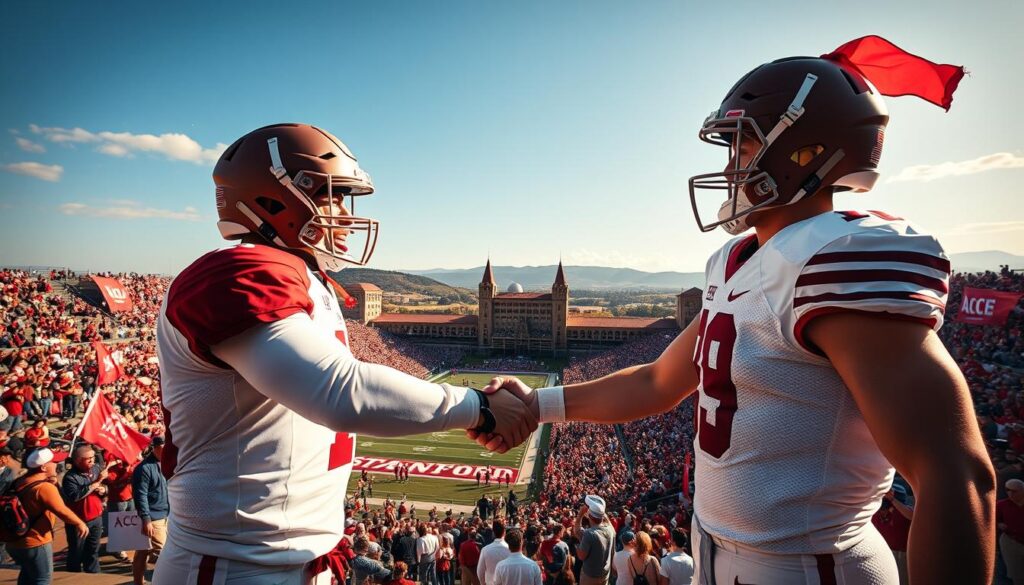
The future of Oregon State and Washington State games is uncertain. These games now feel like support group meetings. Will they remain as non-conference traditions? The answer is unclear, leaving fans wondering.
Fans face a tough choice. They trade old rivalries for new ones. Hosting Duke is exciting, but losing the Big Game’s context is sad. This change is both cultural and financial, as detailed in reports on the league’s westward expansion.
Some rivalries are kept alive in memory, while others are lost. A new set is being forced upon us. The Stanford to ACC move shows that in college sports, your enemies are chosen for you. Now, we must learn to hate them with passion.
What fans should expect from yearly schedules
The Pac-12’s cozy regional circuits are a thing of the past. The ACC schedule is about to change your annual calendar with a sharpie. Your team’s itinerary is no longer a leisurely drive up I-5. It’s a series of logistical feats worthy of a Pentagon briefing.
So, what’s the new blueprint? Think in blocks, not weekends. To make the West Coast travel burden manageable, expect the Bears and Cardinal to become road warriors for extended stretches. Imagine a two-week swing where they play at Clemson, Florida State, and Georgia Tech before flying home. It’s efficient for the athletic department, brutal for the sleep cycles.
Conversely, home schedules will feel like a revolving door of ACC culture. One Saturday, it’s the fast break of North Carolina. The next, it’s the defensive grind of Virginia. Sprinkle in your traditional non-conference rivals for familiarity, and your home slate becomes a national tour without the passport.
The real culture shock, though, is the clock. Game times will now operate on a sliding scale from brunch to bedtime. For East Coast fans, prepare for the truly novel experience of a 10 PM tip-off when Stanford visits. For Californians, your afternoon football game might now be a brunch-time kickoff to satisfy those Atlantic Time Zone broadcast windows.
This creates a new fan calculus:
- Clustered Road Trips: Say goodbye to weekend getaways. Hello, marathon excursions.
- Home Game Variety: Your season ticket is a sampler platter of Eastern football and basketball styles.
- Time Zone Whiplash: Your TV schedule will require a second cup of coffee—or a late-night espresso.
The rhythm is gone. In its place is a spectacle. Your Saturday routine isn’t just complicated; it’s been upgraded to a cross-country culinary and cultural deep dive. One week you’re researching barbecue in North Carolina, the next you’re figuring out how to stream a game that starts at 9 PM local time.
This isn’t merely a schedule. It’s a jet lag calculus wrapped in a national broadcast deal. The consistent regional beat of the Pac-12 has been replaced by the unpredictable, sprawling narrative of the ACC. For the fan, it demands flexibility. It rewards curiosity. And it guarantees that your team’s yearly journey will be anything but boring.
Where to watch: ACC Network and streaming in California
The ACC’s move west is more than just geography. It’s about making your TV screen a part of the action. For years, conference realignment was a distant game. Now, it’s about finding the game on your TV.
The ACC Network is key to the conference’s success. It’s a TV channel, and deals with cable and satellite providers are vital. Adding Cal and Stanford is a smart move, hoping to get more homes to watch.
Will it work? That’s the big question. Providers in California must decide if adding ACCN is worth it. They’ll only do it if they think fans will demand it.
For local fans, this creates a new challenge. If your provider doesn’t carry the channel, you’re out of luck. The ESPN app is a lifesaver, allowing you to stream games with a TV subscription.
But what if you’ve cut the cord? There are options, but they require some digging. Services like YouTube TV and Hulu + Live TV offer ACCN in their higher packages. Your monthly bill is now part of the ACC scheduling drama.
Will Californians tune in to a 9 a.m. kickoff between Syracuse and Wake Forest? The conference hopes the local teams and national brands will attract new viewers. It’s a gamble, but the answer will be in the ratings.
To find the game, here’s a guide for California fans. It’s like your viewing playbook.
| Viewing Method | Key Providers in CA | ACC Network Access | Notable Consideration |
|---|---|---|---|
| Cable & Satellite | Xfinity, DirecTV, Spectrum | Dependent on new carriage deals; not yet guaranteed statewide. | Potential for channel blackouts if deals aren’t struck. Call your provider and ask. |
| Live TV Streaming | YouTube TV, Hulu + Live TV | Included in base or sports add-on packages. | Most reliable cord-cutter option. Check for local channel coverage for other sports. |
| ESPN App Streaming | ESPN.com / ESPN App | Full live stream and on-demand. | Requires login from a participating TV provider (cable or streaming). |
| ACC Digital Network | ACCNX on ESPN+ | Select non-ESPN/ACCN linear games. | A supplemental service; won’t have the biggest football/basketball games. |
This shift makes every fan a media analyst. Your choice of platform fuels the league’s coast-to-coast dream. The ACC scheduling now includes the Pacific Time Zone. Now, it’s up to you to find the channel.
Long‑term upside/risks for both programs and Scorecard: KPIs to revisit each season
The real story of this cross-country shift is just beginning. This is a long game, not a quick fix. The ACC has bought itself stability and added academic prestige. Stanford’s brand is a big plus.
For Cal and Stanford, survival is the upside. They dodged the Group of Five and got a Power Five lifeline. But, there are risks too.
Could athlete burnout from tough travel schedules hurt them? Will a cultural gap affect Bay Area college sports in the Southeast? Is this a permanent home or just a temporary fix? The financial strain is a big worry.
So, how do we keep score? It’s not just about wins and losses. I suggest an annual scorecard. Each season, we should check key performance indicators.
Track recruiting class rankings in the Southeast. Log the travel miles for soccer and volleyball teams. Analyze TV ratings for late-night games on the ACC Network. Monitor athlete welfare surveys. This move is more than a sports story. It’s a live-case study in institutional adaptation.
The final verdict on this bold experiment in Bay Area college sports is years away. The data points will tell the tale.