Everyone dreams of being the next big thing. But what makes some stand out on the field?
It’s not just about arm strength or how fast they can run. It’s that special something that makes scouts watch game footage over and over. It’s the spark that says they could be stars on Saturday nights.
Laguna Beach’s freshmen trio, Luke Bogdan, Winston Darrow, and Charlie Christian, showed something special. They played against Sherman Oaks Notre Dame, a Division 3 team, and shined. They played with confidence and made key plays when it counted.
So, what’s the secret? It’s not just about physical skills. It’s about how well they perform. Talent is important, but it’s how they use it that really matters.
In this article, we’ll look at what makes some QBs to watch truly stand out. In the world of recruiting, finding that perfect mix of talent and character is key.
Quarterbacks: traits and metrics
Everyone loves the long passes and high completion rates. But the real magic is in the quarterback’s mind. It’s like playing chess against huge opponents at super speed.
What makes some QBs stand out? It’s their ability to read defenses before the snap. They spot blitzes and coverage schemes like they have the playbook on their eyelids. They make smart adjustments that impress even veterans.
Pocket presence is a key skill for QBs. Some move like they’re dancing, while others look stiff. The best ones feel pressure without seeing it, thanks to their sixth sense.
Anticipation throws are another key skill. Any QB can throw to an open receiver. But the best ones throw receivers open before they even move. It’s like they’re playing a game of 4D chess.
Let’s look at some important metrics beyond basic stats:
| Metric | Game Manager | Game Changer |
|---|---|---|
| Pressure Completion % | Under 40% | Over 55% |
| Time to Release | 2.8+ seconds | 2.5 seconds or less |
| 3rd Down Conversion | Below 35% | Above 45% |
| Red Zone TD Rate | Under 50% | Over 65% |
| Comeback Wins | Rare | Multiple per season |
Mental toughness is key. How does a QB react after a pick-six? Does he bounce back strong or play timid? The best ones forget their mistakes quickly.
California is known for producing top QB talent. The state’s competitive high school scene prepares QBs for college and beyond. For more on California’s quarterback pipeline, check out this analysis of California’s quarterback development system.
Leadership is hard to measure but vital. Does the QB make his teammates better? Can he turn average receivers into stars? The best QBs don’t just follow plays; they control the game.
When looking at the next big QBs, remember: talent gets you noticed, but mental skills keep you playing. Some five-stars may not make it, while three-stars can win the Heisman.
Running backs: vision, yards after contact
Watching a great running back is like watching a master painter at work. They see the game differently than everyone else. While quarterbacks get the glory, RBs do the dirty work that wins games.
Vision isn’t just about seeing holes. It’s about anticipating them before they develop. The best backs read defenses like chess grandmasters, two moves ahead of everyone else. They have a rare mix of patience and explosiveness that turns nothing into something.
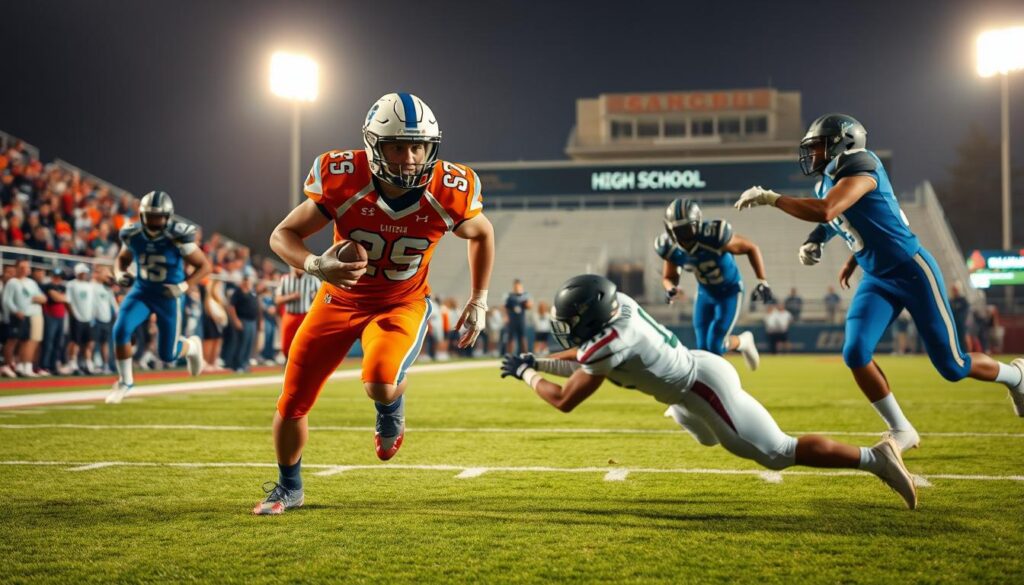
Yards after contact separates the men from the boys. It’s not a statistic – it’s a mentality. Some backs go down at first contact. The special ones treat tackles as personal insults.
They have that magical mix of balance, power, and stubbornness. This turns two-yard gains into game-changing plays.
Charlie Christian is a modern RB prototype. His “never wants to go down without a fight” approach resulted in five receptions for 85 yards while also playing linebacker. This dual-threat capability is no longer optional – it’s essential for any RBs to watch in today’s game.
The modern running back must be:
- A between-the-tackles bruiser with finesse
- A receiving threat out of the backfield
- A pass protector who understands blitz packages
- An every-down weapon who never leaves the field
If you can’t catch passes in today’s NFL, you’re basically a dinosaur waiting for the meteor. The evolution of the position demands versatility. The best backs make something from nothing, turn negative plays into positive gains, and generally make defensive coordinators consider early retirement.
For those tracking the next generation of elite talent, our list of top 2025 California high school running showcases several prospects who embody these exact qualities. These are the RBs to watch who understand that vision isn’t just about what you see – it’s about what you create when there’s nothing there.
Receivers/TEs: target share, explosive plays
If quarterbacks are the conductors and running backs the percussion section, then WR/TEs are the lead guitarists. They either melt faces or leave audiences checking their phones. Target share shows who’s getting the spotlight, but explosive plays show who’s truly worth watching.
Take Charlie Christian’s recent performance: 5 catches for 85 yards from the running back position. Those numbers whisper something beautiful – when this guy gets the rock, things happen. It’s not about volume; it’s about voltage.
The truly elite pass-catchers operate like magicians. They don’t just run routes; they manipulate space and time. Creating separation isn’t about speed – it’s about selling fakes so convincing they could star in a documentary about financial fraud.
Yards after catch separates the artists from the assembly line workers. Catching the ball is basically showing up to work on time. What happens next determines whether you’re getting a promotion or writing TPS reports.
Consider these hallmarks of explosive WR/TEs:
- Turning screen passes into highlight reels
- Winning 50-50 balls like they’re playing against toddlers
- Making quarterbacks look like geniuses for average throws
The best ones don’t just catch passes – they catch defenses napping. And when that happens, the scoreboard changes faster than a teenager’s relationship status.
OL/DL: leverage and win rates
Meet Luke Bogdan and Winston Darrow, two 14-year-old giants changing the game. They’re Division 3 starters, standing 6’4″ and weighing 240-260 pounds. Yet, they hold their own against older, seasoned players.
Leverage in football isn’t just about getting low. It’s about angles, hand placement, and technique. The best linemen know football is a game of inches. They use leverage to turn a 260-pound teenager into an immovable object.
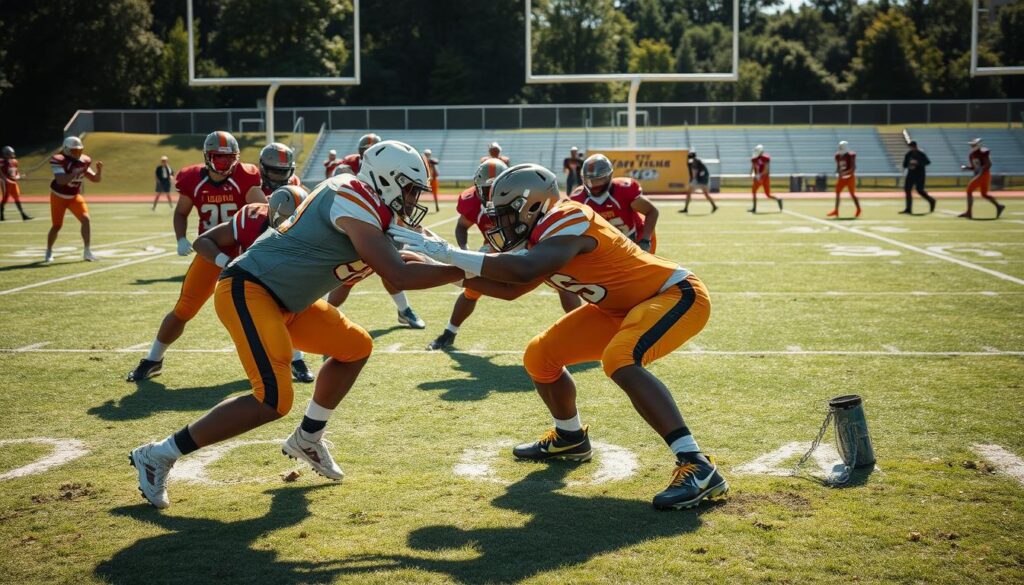
Win rates show the real story behind the highlights. How often does an offensive lineman block successfully? How often does a defensive lineman disrupt the play? These metrics show who’s truly dominant.
The Bogdan-Darrow duo has allowed quarterback Jack Hurst to be sacked only once all season. It’s not just size – it’s technical mastery. These young DL/LB/DB standouts prove football intelligence can beat physical maturity.
| Metric | Offensive Linemen | Defensive Linemen | Elite Benchmark |
|---|---|---|---|
| Pass Block Win Rate | 85%+ | N/A | 90%+ |
| Run Block Win Rate | 80%+ | N/A | 85%+ |
| Pressure Rate | N/A | 15%+ | 20%+ |
| Double Team Rate | N/A | 25%+ | 30%+ |
| Leverage Wins | 70%+ | 65%+ | 75%+ |
The trenches are where football’s most intense battles happen. Every snap is a fight, every game a war. The best linemen make it look effortless, but it takes countless hours of perfecting technique.
These young DL/LB/DB standouts show that football IQ and skill can beat age and experience. They’re not just big bodies – they’re experts in leverage and angles, using physics to their advantage.
LBs/DBs: tackle efficiency and coverage
While quarterbacks get the glory and receivers make the highlights, it’s the linebackers and defensive backs who often decide football games in the shadows. These defensive standouts operate where games are won – in the chaotic spaces between the lines.
Take Charlie Christian’s legendary performance against Notre Dame’s massive offensive line. He showed what makes DL/LB/DB standouts stand out. It’s not about how many tackles you make, but how well you make them. They stop plays with precision, preventing extra yards and reading the game perfectly.
In coverage, the elite have almost psychic abilities. They read the quarterback’s eyes and understand the game like chess. They don’t just react; they anticipate and arrive at the ball with purpose.
Whether facing huge linemen or speedy receivers, these players are a mix of physical strength and strategic thinking. They erase mistakes and stop big plays from happening.
| Defensive Metric | Elite Performer | Average Player | Game Impact |
|---|---|---|---|
| Tackle Efficiency | 92% | 78% | Prevents 3-4 extra yards per play |
| Coverage Breakups | 4.2 per game | 1.8 per game | Forces 2 more punts per game |
| QB Pressure Rate | 18% | 9% | Causes 3 more hurried throws |
| Yards After Catch Allowed | 2.1 yards | 4.8 yards | Saves 25+ yards per game |
The numbers show that DL/LB/DB standouts change games through efficiency, not just flash. They’re the difference between a good defense and a great one. In football’s chess match, they’re the grandmasters, not just pieces.
Special teams difference-makers
In football, special teams are like the unsung heroes who can change the game. They often decide the outcome of close games, even when the offense and defense get all the attention.
Think of special teams as a Swiss watch – every part must work together perfectly. The difference-makers here are not just athletes with certain skills. They are experts in field position.
Punters are like chess players, making smart moves to flip the field. A 50-yard punt can be more valuable than many third-down conversions. They know all about angles and hang time.
Kickers face a big test when the game is on the line. They must kick with precision while 80,000 people watch. The best ones treat fourth-quarter field goals like easy shots in an empty gym.
Return specialists are a rare mix of vision and boldness. They see openings where others see obstacles. One big return can really upset a defense.
Coverage players are like Navy SEALs – they work hard for little glory. They give it their all on every snap, like it’s their Super Bowl.
| Position | Key Metric | Game Impact | Underrated Skill |
|---|---|---|---|
| Punter | Net yardage | Field position | Hang time control |
| Kicker | Pressure conversion rate | Scoreboard impact | Mental resilience |
| Return Specialist | Average return yardage | Momentum shifts | Vision in traffic |
| Coverage Player | Tackles inside 20 | Hidden yardage | Angled pursuit |
The magic of special teams is in the hidden yardage. It’s the extra field position that doesn’t show up in stats but wins games. Teams that control this usually win.
These difference-makers show that football smarts can beat raw talent. They know how to read the game like chess players. When they do, special teams play is like a beautiful poem.
In today’s tight games, ignoring special teams is a big mistake. Smart teams focus on this phase because it can be the difference between winning and losing.
How to track progress week to week
Forget box scores and highlight reels. Tracking player development is like watching a stock portfolio—it’s the subtle trends that matter. Are they refining their footwork? Making smarter reads? Showing more physicality against tougher competition?
Scouting reports from ESPN and 247Sports emphasize trajectory. The best prospects aren’t just good; they’re learners. They adapt, improve, and leave scouts whispering about their ceiling.
Think of it this way: in the recruiting world, scholarship offers follow those who prove they’re getting better every week. Measurable improvements in technique and decision-making separate the standouts from the stagnant.
Keep an eye on ongoing rankings. They tell a story beyond the stats. Who’s rising? Who’s plateauing? That’s where the real drama unfolds.