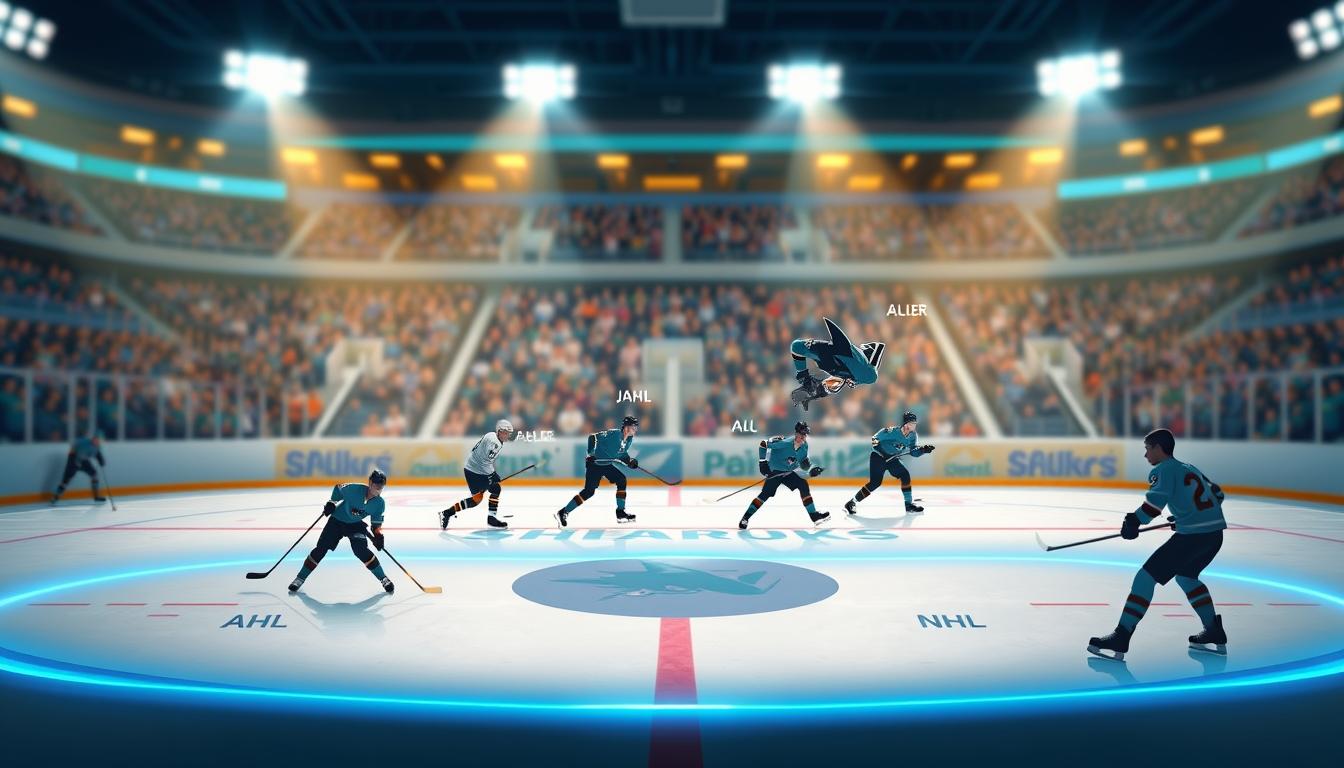
Imagine the SAP Center on a quiet Tuesday. The stands are empty, but the ice is alive. A 19-year-old, a first-round pick, is practicing his shots. This is where the real work happens.
This isn’t a fire sale. It’s a careful plan to grow the team. The San Jose Sharks are focusing on developing players, not just winning games.
This approach is all about building a winner slowly. It’s about growing players over time, not just making quick fixes. We’re seeing a new system being built, one player at a time.
Why the move: media, recruiting, budgets
Let’s not call it a rebuild. It’s more like a hostile takeover. The San Jose Sharks have decided to shake things up. They looked at their old roster and the Western Conference standings and thought, “It’s time for a change.”
This move isn’t about giving up. It’s a smart move to improve the team. The front office is like a private equity firm, focusing on skills coaches to develop young players.
The Strategic Calculus
Forget the idea of a “rebuild.” This is a bold move to take control of the team’s future. The Sharks saw their aging players as assets that needed a fresh start.
They chose to get rid of the old roster to get better draft picks and more cap space. This is like building a new, faster boat instead of fixing the old one. The young players, like Celebrini and Smith, are the foundation. The new prospects, like Misa and Askarov, are valuable assets, and skills coaches are the ones making them shine.
Media Markets and Recruiting Pull
The move is also about media and attracting players. A young, exciting team is more attractive than an older one. The Sharks are selling hope to fans and players alike.
This approach is better for recruiting. Players want to join a team with a clear plan, not just for the money. The Sharks are focusing on development, not just winning now. Skills coaches are key in turning young players into NHL stars.
The budget is more than just money. It’s a plan to invest in the team’s future. Money saved on old players goes to skills coaches, analytics, and tech to improve young players. This is like a corporate takeover, where the goal is to increase value over time.
Travel science: time zones, sleep banking, nutrition kits
Forget the bus. The real opponent on a Western Conference road trip isn’t the other team—it’s entropy. Jet lag, bad sleep, and poor recovery can turn a strong team into a tired one. Winning on the road is a battle against time, sun, and your body’s rhythms.
Modern sports science has turned the NHL schedule into a lab for human performance. The goal is to use travel to our advantage. This is where the science of winning is practiced, away from the spotlight.
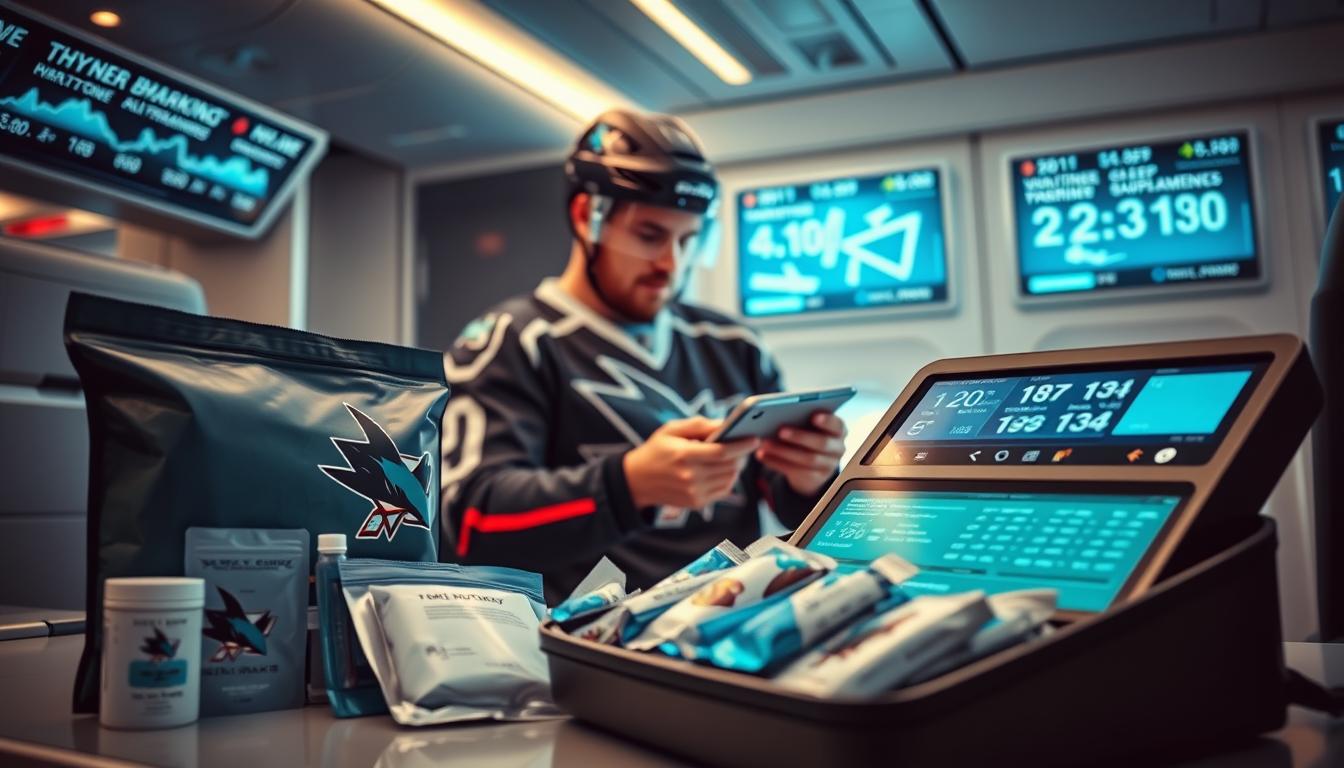
The Road as a Competitive Edge
In the new NHL, hiring a sleep specialist is as important as signing a player. The road is a puzzle where every hour and time zone is a variable. The team that masters the road science gets a big, unseen advantage. It’s like a chess game you don’t see on TV.
Circadian Rhythms and the 82-Game Grind
The 82-game season is a marathon at a sprint’s pace. The body’s internal clock is constantly challenged by flights and time zones. “Sleep banking” is key in managing players. It’s about getting good sleep before a tough trip.
- Strategic Napping: 20-30 minute “power naps” fight fatigue without sleep inertia.
- Controlled Light Exposure: Special glasses and lights trick the body’s clock, shifting it before the flight.
- Individualized Nutrition Kits: Players get personalized kits for dehydration, energy, and muscle recovery.
The table below shows how a modern NHL team prepares for a road trip, from the front office to the training staff:
| Phase | Logistics Team | Performance Staff | Player Protocol |
|---|---|---|---|
| Pre-Flight (72-48 hrs pre-trip) | Books flights for sleep cycles; books hotels with blackout shades & quiet floors. | Begins light therapy & meal timing to pre-adjust to destination time zone. | Begin “sleep banking” with extended, high-quality sleep. |
| In-Flight | Charters configured for rest: lie-flat seats, controlled cabin lighting. | Hydration and nutrition kits distributed; compression gear recommended. | Hydration protocol, light stretching, use of blue-light blocking glasses. |
| Post-Flight (First 24h) | Logistics for on-site recovery: cold/hot tubs, hyperbaric options. | Implements “anchor sleep” protocols to lock in new time zone. | Mandated light exposure, strategic napping, and specific meal timing. |
This isn’t just about comfort; it’s about performance preservation. A player’s shot speed, reaction time, and decision-making are linked to sleep quality. A team that adjusts to a new time zone before arriving has a big advantage. They’re not just traveling to a game; they’re bringing a controlled performance environment with them. The team that masters this science turns the road into a competitive edge.
Scheduling puzzles: back‑to‑backs, study halls
The NHL schedule is like a 3D chessboard. Fatigue is the opponent, and the king is a 19-year-old rookie. It’s a tough, 82-game problem with variables like time zones and sleep cycles.
Winning the Cup needs talent. But surviving the season requires genius in balancing rest and the salary cap.
The front office is key here. It’s not just about who you play, but when and where. A win in October is the same as in April, but the cost can vary a lot.
The Chess Match of the Calendar
Navigating the NHL schedule is like solving a 4D puzzle. It’s a game of logistics with human pieces. A wrong move can lead to injuries or missing the playoffs.
Back-to-back games are a strategic challenge. Do you start your star goalie in the first game, risking him for the second? Or do you rest him for the first game, conceding a loss? The decision depends on the opponent’s power play and your team’s fatigue.
Managing Minutes and Managing Minds
Managing minutes is the public strategy. But managing minds is the shadow game. It’s about convincing players that rest is more valuable than playing.
Call-ups from the AHL are essential. They add depth and energy to the team. A call-up can be a game-changer, like a shutdown defenseman for a key penalty kill.
| Back-to-Back Scenario | Common Strategy | Hidden Cost | Call-Up Implication |
|---|---|---|---|
| Game 1: vs. Playoff Team (Home) | Start Starter, rest top D-pair | High fatigue, risk of injury | Forward from AHL likely for energy |
| Game 2: vs. Non-Playoff Team (Away) | Backup Goalie, roll 4 lines | Potential “trap game” loss | Defensive D-man for shot-blocking |
| Travel: 1 Time Zone West | Starters play, early flight | Sleep debt, poor recovery | Extra forward for fresh legs |
| Travel: 2+ Time Zones | Rest key veterans | Disrupted team chemistry | Multiple call-ups for depth |
The table above is more than a schedule. It’s a guide for managing players. A back-to-back is a puzzle of logistics, physiology, and psychology.
The “study hall” is not a punishment. It’s a chance for players to learn. A young defenseman can study video to improve his game.
Call-ups are key in a salary-cap world. The AHL is a strategic reserve. A call-up can bring a specific skill, like a penalty-kill specialist.
This is the poetry of the 82-game schedule. A loss in October can haunt you in April. Every game is a piece of a larger puzzle, and every player is a piece that must fit perfectly.
Depth/rotation: snap counts & minute mgmt
Building a team is like playing a high-stakes poker game. Your depth chart is your hand. You play your aces differently than your twos. Managing a roster in transition is about who plays, for how long, and against whom.
This is a daily chess match of minute management. It’s balancing development with results. It’s about giving prospects the right chance to shine.
It’s the art of the snap count applied to ice time. You don’t give a young defender the tough assignment right away. That’s how you break them, not build them up.
The modern rebuild is data-driven. It involves zone starts, quality of competition metrics, and shelter.
The 20-Minute Tango
Think of it as the 20-minute tango. You can’t just throw young stars out for a long game against the top line. That’s a recipe for disaster.
Smart teams manage snap counts like an NFL team manages a rookie running back. It’s not just about logging minutes; it’s about investing them.
This is where the front office’s vision meets the coach’s reality. Do you shelter a young defender or throw him into the deep end? Usually, it’s a sheltered deep end.
You give your Sam Dickinson the Quinn Hughes treatment. You don’t give him too much ice time against the best. You start him in the offensive zone and pair him with a veteran. This helps his confidence grow.
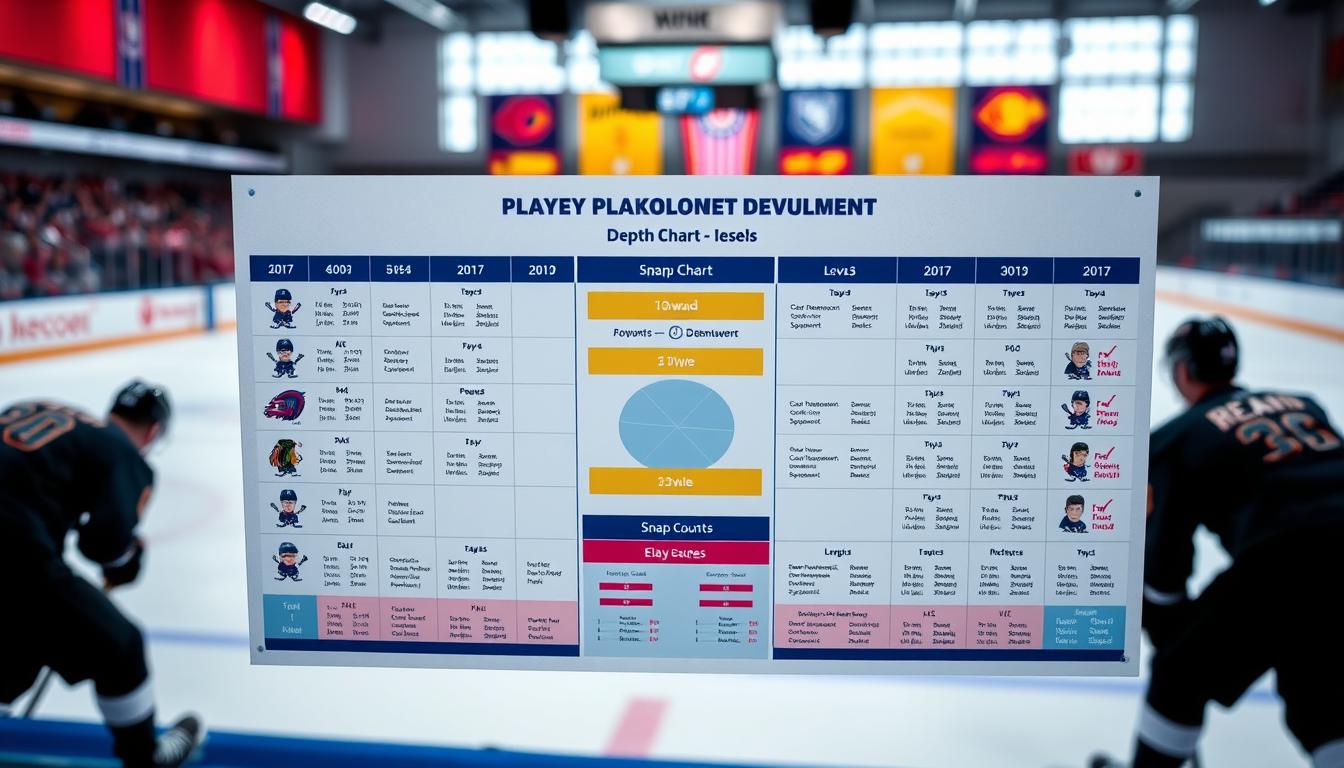
From the Press Box to the Power Play
The journey from the press box to the power play is a big test. It’s not a demotion; it’s a classroom. A young forward might watch a game from above to learn.
The next night, he’s on the second power-play unit. This is thanks to managed minutes and targeted development.
This is the player development pipeline in motion. A goalie like Yaroslav Askarov might not start 60 games in his rookie year. He’ll split time with a veteran to avoid burnout.
The goal isn’t to win the snap count battle. It’s to win the war of player appreciation.
| Player Role | Development Focus | Managed Minutes Strategy | Ideal Matchup |
|---|---|---|---|
| Top Prospect (e.g., Top-5 Pick) | Sheltered Offensive Deployment | 15-18 min/night, Offensive Zone Starts, PP Time | 3rd Line / Bottom-6 Forwards |
| Two-Way Rookie | Defensive Responsibility | 12-15 min/night, Defensive Zone Shelter, PK time | Balanced 5-on-5 lines |
| Veteran Role Player | Mentorship & Matchup Duty | 10-12 min/night, Defensive Zone Starts | Opponent’s Top Line (Defensive Focus) |
| Starting Goaltender (Prospect) | Workload Management | ~45-50 Starts, Limited Back-to-Backs | vs. Mid-Tier Offenses |
The table above is more than a schedule; it’s a player development blueprint. It’s about teaching the right strokes in the shallow end first. The Sharks’ roster decisions are about how they play, and for how long. It’s a delicate dance between winning tonight and building for tomorrow.
Facilities Tied to the Move: The Lab Where Prospects Are Forged
Forget old-school gyms. The San Jose Sharks now have a top-notch facility for player development. It’s not just a gym; it’s a place where the Sharks’ philosophy comes to life. The new facility is a key part of their player-centric approach.
This place is like a high-tech lab for hockey. It’s focused on the details that make a player great. The Sharks are all about the data and the science behind training.
The Lab in the Basement
Inside, you’ll hear the quiet buzz of technology. This is where the Sharks’ future is built. The Barracuda is more than just an affiliate; it’s a key part of the Sharks’ success.
The new facility is a place where NHL and AHL players train together. This creates a seamless path for players to grow and improve.
This isn’t just about bigger spaces or more equipment. It’s about bringing everything together. The analytics team works right next to the cryotherapy suite. This closed-loop system is all about speeding up player development.
From Cryo Tanks to Cognitive Drills
The new complex is a showcase of modern sports science. Let’s explore the key features that make it stand out.
The recovery area looks like something from a sci-fi movie. Athletes use cryotherapy chambers, floatation pods, and red light therapy beds. It’s all about quick recovery to get players back on the ice faster.
The cognitive training room is quiet, except for the computers. Here, players work on their minds as much as their bodies. They use virtual reality and neuro-tracking software to improve their skills.
But the facility’s value depends on the data it provides. Here’s how the Sharks’ new analytics hub helps with training:
| Facility Zone | Technology / Feature | Data Output | Development Goal |
|---|---|---|---|
| Biomechanics Lab | 3D Motion Capture, Force Plates | Gait analysis, power output, efficiency of movement | Optimize skating stride, shot mechanics, injury prevention |
| Performance Kitchen & Nutrition Bar | Metabolic Testing, DNA-based diet plans | Personalized nutrition, hydration, and supplement protocols | Fuel performance, optimize body composition, accelerate recovery |
| Sleep & Recovery Pods | Sleep tracking, HRV monitoring | Sleep quality scores, recovery readiness scores | Enhance sleep quality, manage player load, prevent overtraining |
| Cognitive Training Bay | VR Simulators, Neuro-tracking software | Reaction time, decision-making accuracy, stress response | Improve on-ice IQ, decision-making under pressure |
This facility is a game-changer. It’s not just a place for athletes; it’s where they’re built. It turns raw talent into NHL-ready skills. The Barracuda system uses the same cutting-edge tools as the NHL roster.
NIL & exposure: brand impacts
In today’s world, a hockey team is more than just a sports team. It’s a media company, a lifestyle brand, and a place for growth. For the San Jose Sharks, rebuilding isn’t just about winning games. It’s about building a strong brand.
The team’s new approach is to find partners for the long run. They’re not just looking for players; they’re looking for people who share their vision. The Sharks aim to create a media company that plays hockey, selling a dream to future stars.
Building a Brand, Not Just a Team
The old way was simple: draft, develop, and win. Now, it’s all about telling a story. The Sharks are rebuilding with a focus on their brand identity.
They aim to be the “Michigan of hockey.” It’s not just about playing games; it’s about getting attention and building a path to the NHL. The Sharks offer more than just a place to play; they offer a chance to grow a personal brand.
This approach is all about building relationships and selling a vision. It’s not just about signing players; it’s about creating influencers and community leaders. The Sharks’ culture of development is so strong, it attracts the talent it promises to grow.
From Sweat to Social Media
The agent’s mindset is pure genius. It’s not just about improving a player’s skills; it’s about building their brand. The Sharks’ social media shows the hard work and personality behind the scenes.
It’s a 24/7 showcase of the Sharks’ development machine. Prospects see a path to the NHL and a chance to grow their brand. This is the new way to succeed.
The agent-GM’s strategy is to offer more than a contract. The Sharks’ rebuild is a lesson in this approach. They promise more than just playing time; they offer exposure, media training, and a brand-building machine.
This creates a cycle where a strong brand attracts more talent. It’s a rebuild that happens on social media as much as on the ice.
This approach makes the Sharks different from traditional sports teams. The table below shows the shift.
| Traditional Model | Modern Brand-Build (Sharks Model) | Impact on Recruiting |
|---|---|---|
| Focus on stats and wins. | Focus on narrative and personal brand development. | Attracts players who value legacy and personal growth. |
| Media as a PR tool. | Media as a core business and recruitment arm. | Creates a 360° experience for the player and fan. |
| Development = On-ice skills. | Development = On-ice skills + personal brand + media training. | Creates more marketable, well-rounded athletes. |
| Player is an employee. | Player is a brand partner and stakeholder. | Fosters loyalty and a deeper, more valuable connection. |
In the end, the Sharks’ most valuable asset might not be their draft picks. It’s their ability to sell a dream. They’re not just drafting players; they’re signing brand ambassadors for the future. In the NIL era, this is the blueprint for success.
Road-trip guide: best Big Ten away experiences
The Sharks’ move to the Big Ten is more than a conference switch. It’s a cultural exchange with a twist of physical play. We’ve traded a compact circuit for a long, cross-country journey. It’s not just about getting from one place to another; it’s a journey.
For the team, it’s a new challenge in hostile arenas. For fans, it’s a chance to explore new places. So, grab your team’s colors and get ready for adventure. Here’s your guide to surviving and thriving on a Big Ten hockey road trip.
A Tour of the New Conference
Forget the neutral-zone trap; the real challenge is navigating the Big Ten’s cultural and geographic sprawl. It’s like traveling across a continent. A Tuesday night in Iowa City is different from a Saturday in State College.
The travel schedule is tough but beautiful. It will test the Sharks’ depth and fans’ loyalty. You’ll face early flights, bus rides, and finding good coffee in different time zones. The travel secretary deserves a medal before the season starts.
From Happy Valley to Piscataway: A Fan’s Itinerary
Your journey is full of contrasts. Start in State College, PA, where the pre-game atmosphere is electric. Enjoy a “Fries with the Works” from the Berkey Creamery and visit a downtown dive with 80s hair metal.
Next, visit Piscataway, New Jersey. The arena is modern, but the soul of the trip is in a legendary cheesesteak spot. The air smells of the Turnpike and ambition.
Then, head to the University of Michigan in Ann Arbor. The pre-game buzz in Yost Arena is legendary. Enjoy a deep-dish pizza from a 40-year-old joint off-campus.
Don’t miss a Tuesday night in Iowa City in February. It’s an endurance test of Midwestern winter. The atmosphere is intimate, and the post-game decompression is at a local craft brewery.
This new footprint is a gift for fans. It’s not just a schedule of games; it’s a tour of American college towns. The Sharks are inheriting new backdrops for their story. The road is the main event.
Year-one benchmarks: SP+/FPI, net ratings
Wins and losses show what’s happened, not what’s happening. The real story of a team’s health is in the data, before the standings show it. To see how the San Jose Sharks are doing, we need to look beyond wins and losses.
The Analytics of a Rebuild
Forget the final score for a second. The real action is in the data. Advanced metrics like Corsi and expected goals are our new scoreboard.
They show if the Sharks are controlling play and creating quality chances. It’s like Moneyball on skates, where the goal is to control the game, not just the scoreboard.
Beyond the Win-Loss Column
So, how do we measure a rebuild before the wins come? We look at small improvements. Is Shakir Mukhamadullin’s defensive game better on North American ice? Are his defensive zone exits cleaner?
For prospects like Will Smith, it’s not about points—it’s about process. Is Will Smith’s shot generation going up? Is William Eklund’s two-way game making a positive impact?
We’re tracking development, not just scores. The true benchmark is if the core pieces are improving. The rebuild is a dataset, and the Sharks are writing the code.