Every week, a quiet miracle happens in Santa Clara. Levi’s Stadium, a massive 1.85 million-square-foot space, comes to life. It’s a giant of steel and concrete, quiet except for the hum of its systems.
Then, a switch flips. This is the NFL prep week. In just five days, 70,000 empty seats become a roaring arena.
This isn’t just a stadium; it’s a shape-shifting organism. Its history is etched in its beams. It opened in 2012 and got its naming rights in 2013. It has over 68,000 seats and hosted a Super Bowl.
Yet, every seven days, it’s reborn. The grass is pristine on Thursday but becomes a battlefield by Sunday.
What we see on game day is the final act of a complex, behind the scenes ballet. This is the anatomy of a 49ers game week. It’s a look behind the scenes at meetings, technology installs, and the army of staff.
It’s less a sporting event and more a weekly, city-scale special operation.
Weekly Microcycle: Recovery → Activation → Tactical Day
The San Francisco 49ers don’t just go through the motions in an NFL week. It’s a carefully planned three-part process. This sports science-driven cycle is as precise as a Swiss watch. It’s not just practice; it’s a high-stakes, scientific operation.
The NFL prep week starts with a focus on numbers, not a whistle. The day after a game, the training facility buzzes with a new kind of intensity. It’s all about understanding the reasons behind sore muscles and mental fogginess.
Recovery isn’t just sitting back. It involves cryotherapy, soft-tissue work, and analyzing data. Who ran the most miles? Who’s showing signs of fatigue? The sports science team uses data from GPS trackers and WHOOP bands to guide recovery.
From Film Room to Activation
By midweek, the focus changes. The “activation” phase combines physical and mental effort. Players aren’t just running drills; they’re studying the opponent’s moves in the film room.
This is where the NFL prep week gets smart. Coaches analyze the opponent’s defense or offense, highlighting key tendencies. The sports science data also helps determine which players are ready for full-speed work.
The Tactical Grind: Where the Game Plan Lives
This is the intense part. The tactical day is a full-scale simulation, not a rehearsal. The sports science data from earlier guides the physical load. The playbook is put into action, but it’s not just about running routes.
It’s about executing them perfectly against a scout team mimicking the opponent’s defense. A single mistake is a failure. Coaches watch closely, and the film session that follows is brutally honest.
The entire NFL prep week is a cycle of increasing intensity. It’s a system designed to turn elite athletes into a single, synchronized unit. The goal is to make Sunday’s chaos seem like a rehearsed script.
Opponent Scouting and the Set-Piece Lab
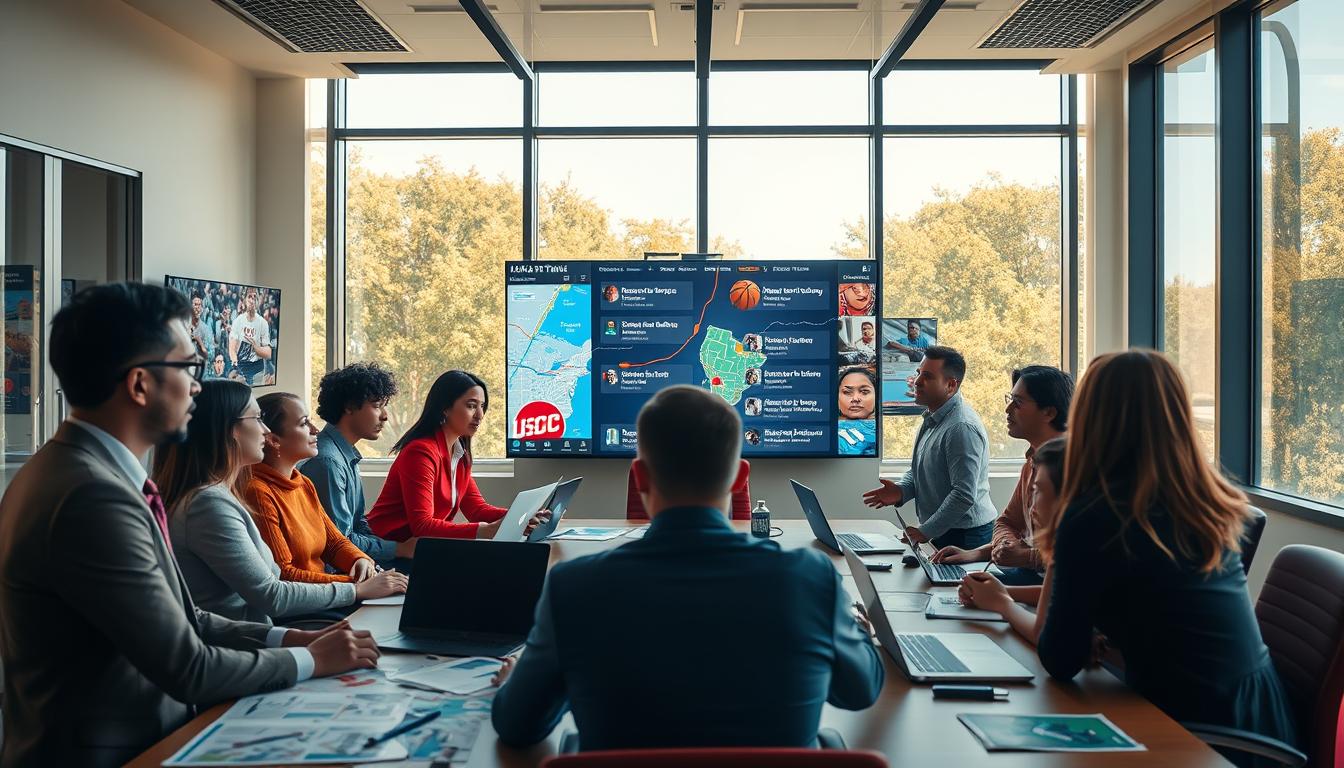
Forget the NFL prep week montage of a coach screaming in a dark film room. Today’s war room is quiet and tech-savvy. It’s where games are won before the first play.
This is the “Set-Piece Lab”—a place where football meets forensic science. Here, the practice scripts are not just plays. They are detailed plans to exploit a small weakness.
The lab’s key tool is a camera. The 49ers teamed up with Foxconn and Fii to install an 8K camera system. It’s not for replays. It’s for detailed analysis.
When coaches “zoom in on 4th and 1,” they’re not just looking at a scrum. They’re checking the defensive end’s hand placement and the safety’s hips. This is scouting at the molecular level.
This detailed analysis leads to the set-piece. Think of a soccer corner kick play. In football, it’s the first 15 plays or a 2-minute drill. These are not suggestions; they are commands.
From Film Study to Predictive Play-Calling
Gone are the days of just watching hours of tape. Today’s NFL prep week uses predictive analytics and detailed film. The 8K system helps coordinators study an opponent’s guard’s hand-fighting technique.
This data, combined with AI, lets the 49ers script not just the first 15 plays. They script the first 15 counters to the opponent’s expected counters.
The “lab” is a living document. It’s where coordinators play a game of 4D chess. They script responses to every possible look. The “set-piece” is their opening move.
| Aspect | Traditional Scouting | Modern “Set-Piece Lab” |
|---|---|---|
| Primary Tool | Game film on a projector | 8K, 120fps multi-angle video; AI-driven analytics |
| Focus | What the opponent did | How they did it, why they did it, and what they’ll do next |
| Play Scripting | General game plan for personnel | Pre-scripted “set-pieces” for specific down/distance, personnel, and field position |
| Outcome | Reactive adjustments | Proactive, predictive scripting |
The result is a practice script that feels like a military operation. Each repetition builds muscle memory for scenarios. When the play clock is down, the team uses the scripts and set-pieces they’ve practiced.
This is the alchemy of modern NFL prep week. It turns data and film into a single, executable game plan. The 49ers aren’t just watching film; they’re using it to write the script for Sunday.
Academy Integration and the Minutes Management Conundrum
The San Francisco 49ers, like all NFL teams, have a 16-man practice squad. It’s a place where players develop and prepare for the future. This squad is not just for the bench; it’s a key part of the team’s strategy.
The challenge for coaches isn’t just picking the starting lineup. It’s about making the most of every practice rep. They need to balance developing talent for the future with winning now.
The NFL prep week is more than just practice. Coaches use practice scripts to test players and strategies. Every practice rep is valuable, whether it’s for the starters or the bench players.
Decisions on who gets to practice at full speed are critical. Coaches use data to decide when to give players a break. This helps keep everyone healthy and ready for the game.
The 53-man roster is what fans see, but the practice squad is the team’s secret weapon. It’s where new talent is honed and specific roles are perfected. Players on the practice squad play a big role in preparing for opponents.
The table below shows how the two rosters work together to shape the team’s strategy.
| Category | 53-Man Active Roster | 16-Man Practice Squad | Key Function |
|---|---|---|---|
| Primary Role | Game-day execution; win the current week. | Development & contingency; win the future. | Immediate production vs. long-term development. |
| Weekly Focus | Executing the game plan; managing snap counts to win on Sunday. | Running opponent’s schemes in practice; developing skills in a low-pressure environment. | Directly contributes to the immediate game plan and player health. |
| Minutes/Snaps | Snaps are a precious commodity, meticulously managed for veterans and stars. | Snaps are for development and simulation; a safe space to make mistakes and learn. | Asset management: protecting current assets vs. investing in future ones. |
| Strategic Value | Immediate on-field production and victory. | Acts as a “football laboratory” and a live database of opponent schemes. | Balancing the needs of “now” with the necessity of building for “later.” |
Managing a rookie’s practice time is smart, not soft. It’s about preparing for the future while winning now. The practice squad is the team’s playbook, running drills and taking hits to protect the starters.
Every snap is an investment in the team’s future. From the quarterback to the practice squad, every player is a key piece in the team’s strategy. It’s a game of chess, where every move matters.
Stadium Ops: Tifo, Security, and the Supporter’s Journey
While players practice, a different game is happening in the concourses and parking lots. Moving 70,000 people in and out of a stadium is a huge task. It’s like a military operation, with traffic cones and radio chatter guiding the way.
This isn’t just opening the gates. It’s a big effort to get a city’s worth of people ready for the game. They all need to get in with a beer in hand before kickoff.
The Choreography of Chaos: From Traffic Jams to Tifo
The logistics machine starts early. It deals with 20,000 vehicles and 45,000 VTA riders. The plan for parking, ride-share drop-offs, and pedestrian flow is complex.
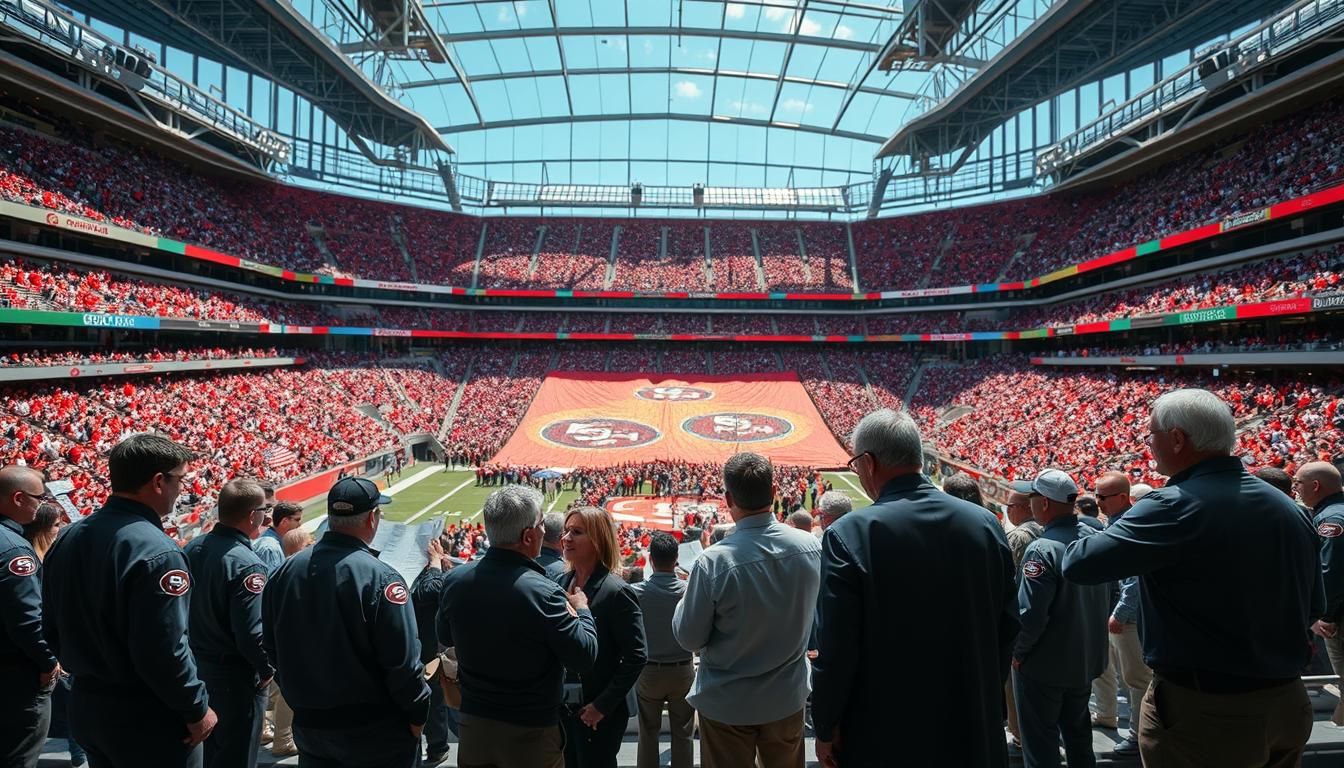
Inside, a big art project is being set up. The tifo displays in the supporters’ section take weeks to prepare. The club’s front office, supporter groups, and the stadium’s team work together. They make sure everything follows the rules and looks great.
The Invisible Funnel: Security and the Supporter’s Journey
Security is key to the whole operation. Metal detectors, bag checks, and pat-downs are serious business. They make sure everyone is safe without slowing down the crowd too much.
The logistics of security is a puzzle. It’s about keeping everyone safe while moving 70,000 people through a funnel. Security teams use technology and their instincts to spot any problems.
The fan’s journey has many checkpoints:
- The Approach: Getting through traffic and parking logistics to reach the stadium.
- The Threshold: Passing through security and ticketing, where the crowd is controlled.
- The Concession Conundrum: Getting food and drinks without missing a moment. This is a big challenge for the stadium.
For more on how stadiums are designed, check out a recent report on modern stadium design.
The Final Play: Orchestrating the Exit
The exit is the most chaotic part of the game. Getting 70,000 people out is a big challenge. It’s done in a controlled way, with a plan for traffic, public transit, and ride-share services.
This plan turns a packed stadium into an empty parking lot in under 90 minutes. It’s a big effort that fans often don’t even notice.
The Broadcast Footprint: More Than Just a Pretty Picture
What you see on your 4K TV is just the tip of the iceberg. Behind the scenes, a massive production city works its magic. This city is a temporary Hollywood, filled with technology and teamwork, making your game-day experience possible.
While you watch the quarterback throw a pass, a world of screens and wires is working behind the scenes. They’re building the story you see on your TV.
The All-Seeing Eyes: Beyond 8K
Forget about 4K. The real power at Levi’s Stadium is an 8K, 120fps camera system from Foxconn. It’s not just for better grass colors. It’s a data-gathering beast.
Every play and every detail is captured in high detail. This technology is a game-changer for both viewers and coaches. It lets them see every action in crystal-clear detail.
The Symphony of the Truck
The cameras are the eyes, but the production truck is the brain. It’s a city of technology that arrives on game day. It’s filled with cables, servers, and monitors.
This is where the magic happens. The director, like a conductor, guides the cameras. They build the story of the game. The director’s voice is in the headsets of many, guiding the broadcast.
The difference between what fans see and what the crew sees is huge. It’s like knowing the secret behind a magic trick.
| Fan’s View | Production View |
|---|---|
| A quarterback drops back to pass. | Director calls: “Ready Camera 5 on the QB. Camera 3, get me the safety. Replay, get me an iso on the slot receiver.” |
| A running back breaks a tackle for a first down. | Replay producer calls for the “Iso Cam 4” to isolate the key block, while the audio mixer isolates the on-field sound of the hit. |
| The crowd roars after a touchdown. | The audio director is blending 30+ mic feeds—the on-field crunch, the crowd’s swell, the quarterback’s cadence—into the seamless soundscape you hear at home. |
| A close call at the goal line. | The replay official is already scrubbing through the 8K feed in super slow-motion, while the broadcast team prepares a multi-angle replay package for the audience. |
The Invisible Wall of Sound
The audio mix is the real hero of the broadcast. It’s a complex mix of sounds. The director is not just calling camera shots; they’re also mixing the audio.
They balance the sound of pads with commentary and crowd noise. One wrong sound can go viral fast. It’s a high-wire act, balancing chaos with polish.
So, next time you watch a 49ers game, remember the massive effort behind it. Every detail is the result of a huge operation. The broadcast footprint is a complex machine that makes the magic happen.
Environmental Factors: The Unseen Opponent
The roar of the crowd is loud, but the real battle at Levi’s Stadium is against the environment. For the San Francisco 49ers, winning isn’t just in the playbook. It’s in the grass, air, and light of their home turf. Here, sports science turns the stadium into a 53rd player.
The battle starts on the ground. The Bandera Bermuda grass at Levi’s is more than a field. The grounds crew, who are turf scientists, manage the soil moisture. They make sure the grass is just right for the players, preventing injuries.
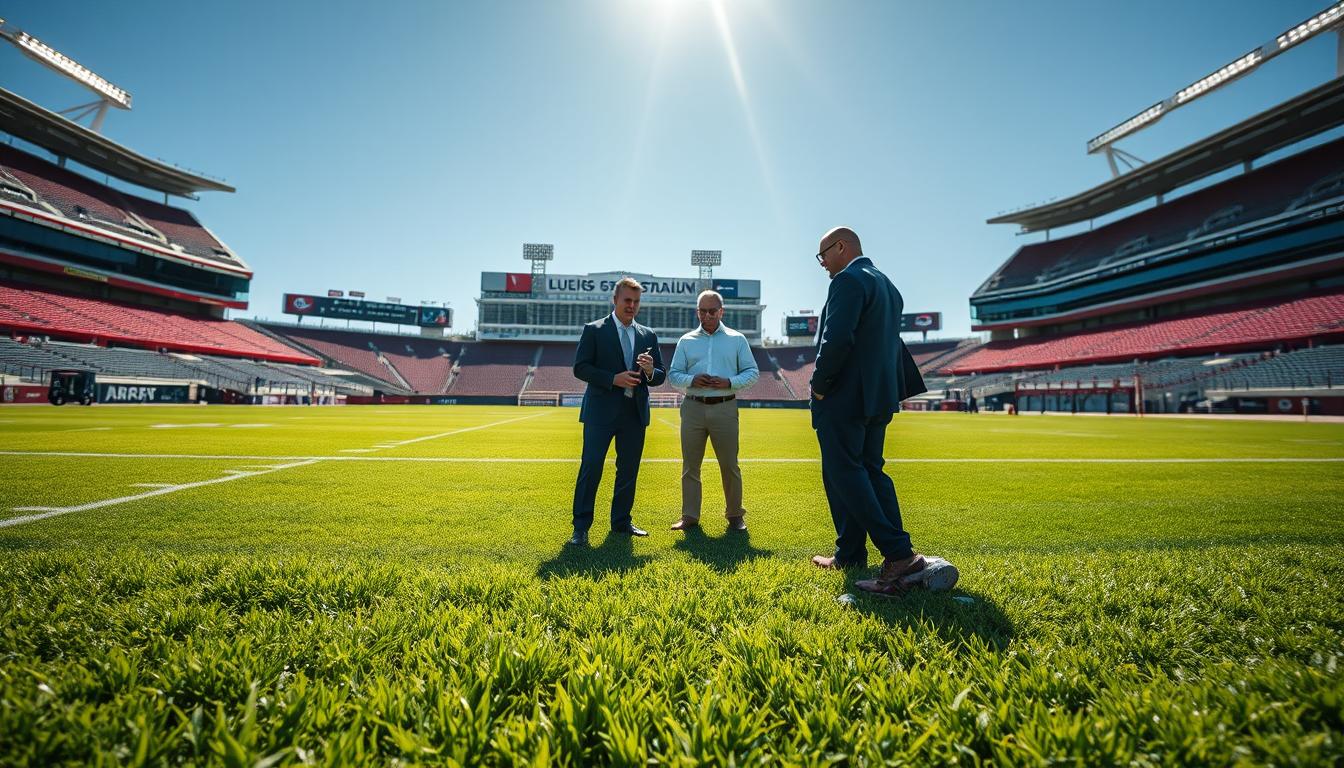
The grounds crew aren’t just mowing grass; they’re curating a living, breathing pitch that’s the first line of defense and a subtle, legal home-field weapon.
The stadium itself is a masterpiece of environmental engineering. It’s LEED Gold certified, which means it’s eco-friendly. The design keeps the playing surface at the best temperature for the players. The kickoff time is chosen to avoid the worst of the sun glare.
The following table shows how Levi’s Stadium is different from away games:
| Environmental Factor | Levi’s Stadium (Controlled) | Neutral/Adverse Away Game |
|---|---|---|
| Playing Surface | Bandera Bermuda, moisture-optimized for traction & “give” | Unknown turf, variable hardness, possible seams |
| Temperature/Humidity | Stadium design & cooling systems keep players cool | Weather can be extreme (Miami heat, Green Bay cold) |
| Sun & Wind | Stadium design avoids sun glare for home team | Uncontrolled; sun glare, unpredictable winds |
| Acclimatization | Players are adapted to local climate and altitude | Potential for jet lag, humidity shock, or altitude sickness |
This isn’t luck; it’s science. The grounds crew is like the A-Team of turf management. They manage the grass like a biome. The kickoff time is chosen to use the sun as a defender.
The 49ers don’t just play on their field; they play with it. Every detail, from the grass to the sun, is considered. This is the ultimate use of sports science: engineering victory through the environment.
Post-Match: The 48-Hour Rule and the Grind
The final whistle blows. For fans, the game is over. But for players and the sports science team, it’s just starting. Welcome to the 48-hour rule.
This isn’t a suggestion; it’s a must. The first 48 hours after a game are critical. They decide if the body is ready for the next challenge or needs a break. The cool-down isn’t just a jog. It’s a detailed plan to help the body recover before the next game.
Think of it like a mechanic fixing a Formula 1 car after a race. Players follow a precise protocol right after the game:
- Phase 1: The Cool-Down (0-2 hours): They do light cycling, contrast water therapy, and use Normatec boots to remove waste from muscles.
- Phase 2: The Rebuild (2-24 hours): They focus on protein to help muscles repair. Some teams use cryotherapy and hyperbaric oxygen chambers for faster recovery.
- Phase 3: The Recalibration (24-48 hours): They analyze data from WHOOP or Oura rings. Heart Rate Variability (HRV) is key. A low HRV score means no intense practice, even if they feel ready.
This isn’t just a guess. It’s based on data and is non-negotiable. The goal is to clear out the last game’s fatigue before facing the next opponent.
The following table shows the main parts of the 48-hour protocol:
| Phase | Time Window | Key Activities | Primary Goal |
|---|---|---|---|
| Phase 1: Cool-Down | 0-2 Hours Post-Game | Active recovery, contrast therapy, Normatec boots, hydration protocols. | Flush metabolic byproducts, reduce inflammation. |
| Phase 2: Rebuild | 2-24 Hours | Protein synthesis windows, cryotherapy, hyperbaric oxygen, targeted nutrition. | Initiate tissue repair, replenish glycogen, reduce systemic inflammation. |
| Phase 3: Recalibration | 24-48 Hours | HRV monitoring, sleep analysis, light mobility, film study. | Assess readiness, inform practice load, prevent overtraining. |
This 48-hour window is key in modern sports science. It’s a strategic move in a long season. You don’t just train to play. You train to recover. The team that masters recovery is ready for the next game.
Fan Arsenal: Arrival Windows, Sound, and Stadium Hacks
Forget the playbook. The true professional doesn’t just attend the game; they execute a tactical operation. The first, and most critical, piece of logistics is your arrival. The amateurs are stuck in a symphony of brake lights on the freeway. The pros know the VTA light rail is the only civilized approach.
Your seat is not just a seat; it’s a sonic command center. The true fan knows the sound moments. When the defense faces a critical 3rd and 8, the noise you make isn’t just fandom—it’s a tactical weapon. The 12th man isn’t a cliché; it’s a strategic asset.
Smart logistics extend beyond the game clock. The 49ers Museum, presented by Sony, is not a pre-game time-kill. It’s a 20,000 sq. ft. tactical briefing. It’s a climate-controlled retreat to explain the West Coast Offense to a date, or to absorb the ghosts of championships past.
It’s where you find the context that turns a casual viewer into a strategic observer. This is how you consume the spectacle. You don’t just watch. You deploy.