Welcome to the wild, wild West of amateur athletics. The rules have changed. What was once a dusty frontier of “amateurism” is now a booming, profit-sharing continent.
A landmark legal settlement changed everything. Universities like UCLA and USC can now pay their players directly. They have a $20.5 million direct payment pool. It’s like back pay for decades of free labor.
But the old system didn’t disappear. Donor collectives are thriving in a gray area. A new body, the College Sports Commission, is trying to regulate this. They say third-party deals must have a “valid business purpose.”
This national change started in California. The state’s 2021 California NIL law was the first step. Now, “student-athlete” is more about taxes than identity. Let’s explore this new territory.
What NIL Looks Like in California (Laws and School Policies)
California’s NIL scene is more than just simple rules. It’s a mix of state laws, school policies, and court battles. The rules keep changing, thanks to lawmakers, school leaders, and judges in Oakland.
Getting it means seeing it as a complex cake. Each layer adds a new twist, making it both challenging and exciting.
- The Foundation: The Fair Pay to Play Act. California’s California NIL law opened the door in 2019, challenging the NCAA to sue. It gave college athletes the right to earn from their name, image, and likeness. This bold move set the stage for what followed.
- The Frosting: NCAA (and now CSC) Guidance. The NCAA’s “interim” rules offered a shaky framework nationwide. With the CSC, this layer is evolving, trying to bring order to the chaos it once resisted.
- The Explosive Sparkler on Top: The House Settlement. This changed everything. It requires schools to share revenue directly with athletes. It’s not just about endorsements anymore; it’s about schools paying athletes.
How this cake is served varies by school. It depends on ambition and budget, and not all schools have the same resources.
| School | Institutional Stance | Direct Payment Plan | Current Reality |
|---|---|---|---|
| UC Berkeley | All-in, publicly strategic. | Chancellor Rich Lyons outlined a $16 million distribution plan focused on football and basketball. | Leading the public school charge; a focal point for Bay Area collectives. |
| UCLA & USC | All-in, publicly coy. | Committed to the full $20.5 million annual cap. | Playing their cards close to the vest, leveraging L.A. market power without revealing the playbook. |
| UC San Diego, Cal State Bakersfield, etc. | Quietly opted-in. | Theoretical for now. | Budget constraints make this new world an aspiration, not an immediate operational shift. |
This patchwork shows a big gap. For top schools like UCLA and USC, the House settlement is a big opportunity. But for many other schools, it’s just a dream. The state’s law opened doors, but the settlement showed the financial gap between schools.
So, what’s the takeaway? The California NIL law was the starting point. The House settlement added new possibilities. Now, we see which schools can take advantage of these chances. This chaos is what makes room for creative and sometimes desperate deals by Bay Area collectives and others.
Overview of major collectives by campus
The world of NIL collectives in California is changing, not dying. The July 31 memo from the California Student Aid Commission (CSC) didn’t end the game. It just updated the rules. Now, every group funded by boosters must show it’s a real business, not just a fan club with money.
This change is about proving a valid business purpose. Athletes’ pay must match the promotion of a product sold for profit. The old days of $200,000 for an autograph are gone. Today, it’s about selling products, not just signing them.
So, who are the major players adapting to this brave new world? Let’s tour the campuses.
The L.A. Powerhouses
In Los Angeles, the USC NIL scene is like a startup. Trojans’ collectives were early leaders, attracting top talent. They’re now moving from just recruitment to brand partnerships. It’s about creating content for brands, not just selling jerseys.
Across town, UCLA NIL efforts are becoming more focused. The new rules are pushing for a unified strategy. Bruin athletes are now connecting with Southern California’s tech and entertainment worlds. It’s about influence, not just support.
The Bay Area Brain Trust
In the Bay Area, collectives for Cal and Stanford are unique. They’re entrepreneurial, network-driven, and tech-focused. For these schools, it’s not just football. It’s about athletes as ambassadors for Silicon Valley.
Key changes include:
- Creating formal service catalogs (social media, clinics, endorsements).
- Setting clear values for an athlete’s work.
- Working with local chambers to find real deals.
The collectives that succeed will act like marketing agencies, not just booster clubs. They’re now key players in the spotlight. Their product is real advertising, not just access. In California’s competitive market, this is a lesson worth learning.
Categories of deals popular with California athletes
California’s college athletes are now signing deals that would make a Hollywood agent blush. The market has grown fast, like a freshman’s slide into transfer portal rumors. They’re not just getting one-time payments; they’re building a portfolio.
he top deals are social media brand ambassador contracts. A star quarterback might post a reel with an energy drink and earn five figures. It’s influencer marketing, but with a 40-yard dash time. Behind the scenes, structuring and tracking these deals increasingly relies on tools as sophisticated as white-label bookmaker software, where analytics, contract management, and revenue tracking are built into a seamless platform. These deals are all about clout, often negotiated by agents.
Next, there’s the trading card and memorabilia licensing scene. Companies like Panini and Fanatics are getting athletes for cards and autographed merchandise. It’s a direct way for fans to support their favorite players, turning their likeness into collectibles.

Many athletes earn from local business appearances. Think car dealership grand openings or restaurant promotions. It’s the middle class of NIL income, focusing on local hero status. A standout gymnast might host a clinic, while a basketball player signs autographs at a sneaker store.
Don’t forget nonprofit and cause-related partnerships. These deals offer compensation and positive PR. An athlete might promote a charity fundraiser or advocate for a cause they care about. It’s a win-win, showing NIL is about more than commerce.
Look at UCLA’s Karson Gordon. His portfolio shows diversification. He’s partnered with a sunglasses brand and a beverage company. It’s not just one deal; it’s a strategic income stream.
The scale is staggering. Top football and basketball players in California can secure deals worth nearly $300,000. The USC NIL machine is designed for high-value brand synergy. But it’s not just for five-star recruits. A swimmer with a strong TikTok following or a soccer player with local appeal can also play this game.
The takeaway? The California college athlete endorsements market is complex. It rewards star power, but also savvy, consistency, and audience connection. The playbook has been completely rewritten.
Compliance, taxes, and disclosure—what fans should know
If you think college athlete endorsements are just about fancy cars and deals, you’re missing the point. The real story is about the IRS and compliance officers. They’re the ones who make sure everything is above board.
Disclosure is key. That cool video for a local restaurant? If it’s worth over $600, the athlete must tell their school. Schools then share this info, without names, in a national database. It’s all about being open and fair.
The NIL Go clearinghouse is like a bouncer. It checks if deals are fair. For example, is a $50,000 deal for a social media post okay? It helps schools follow the California NIL law.
Taxes are a big deal. That big check isn’t all yours. Athletes have to deal with taxes for the first time. They’re now on their own for taxes, which can change their financial situation.
So, when you see a deal announced, think about what’s really going on. The real battle is between the California NIL law and the NCAA’s old rules. The paperwork and taxes are all part of making things official.
Competitive advantages/risks vs other states
Looking at California’s edge in the NIL race is like judging a surfboard in a pool. The early days seemed promising, but a national settlement has changed the game. Does California’s early start count anymore?
First, there’s the first-mover brand power. Schools like USC and UCLA were early adopters. They built a reputation as hubs for athlete entrepreneurs.
Then, the massive media markets. Los Angeles and the Bay Area are global content hubs. An athlete’s post here reaches far and wide.
The public funding angle is also a point of debate. Schools like UCLA might use public funds for NIL. This is different from private schools that rely on donors.
But, there are risks too. The high cost of living in California makes deals less valuable. A $50,000 deal in Ohio goes further than in California.
California’s dense regulatory environment adds complexity. The state law was a pioneer, but it also means more rules. This makes NIL less fun.
The national framework from the CSC settlement has leveled the playing field. No state can now create a lawless paradise. The experiment is over.
The competition has changed. It’s now school against school. Can Stanford’s donors outdo Texas’s? Can UCLA’s deals in LA compete with Ohio State’s fanbase?
The battle is now about resources, charm, and local business. The table below shows the new reality.
| Competitive Factor | California’s Reality | Other Top States’ Reality | Verdict |
|---|---|---|---|
| Regulatory Framework | Pioneering state law + NCAA rules + CSC national standards. Complex. | Often just NCAA + CSC rules. Streamlined, but less state-level innovation. | Other states have cleaner compliance. California’s head start is now a regulatory maze. |
| Funding Sources & Potentia | Mix of mega-donors, local businesses, AND public university funds. | Primarily driven by billionaire alumni and fan-centric collectives. | California’s public-funding angle for UCLA NIL is a unique, if contentious, wild card. |
| Media & Market Size | Unmatched global media hubs (LA, SF). Built-in audience for brand deals. | Large, passionate regional markets (SEC, Big Ten country). Less global, more intense. | Clear California advantage. For national brand seeking, West Coast wins. |
| Cost of Living Impact | Severe. A major portion of NIL earnings is absorbed by rent and expenses. | Significantly lower in most major college towns. Earnings go further. | Major risk for California. A $100K deal elsewhere might feel like $150K. |
| School vs. State Competition | Bay Area collectives vs. USC’s legacy network. Internal rivalry is fierce. | Often unified state efforts (e.g., all of Texas backing its schools). | California’s internal competition fragments resources but drives innovation. |
The conclusion is clear. California’s early lead was significant. But the national settlement has changed the game. The advantages—media and money—and the risk—high costs—are now permanent in a nationwide competition. The charm offensive is now everything.
Case snapshots: football, hoops, Olympic sports
The new NIL economy in California has created a financial skyscraper. It has a penthouse, luxury floors, and a crowded basement. Let’s explore who lives where.
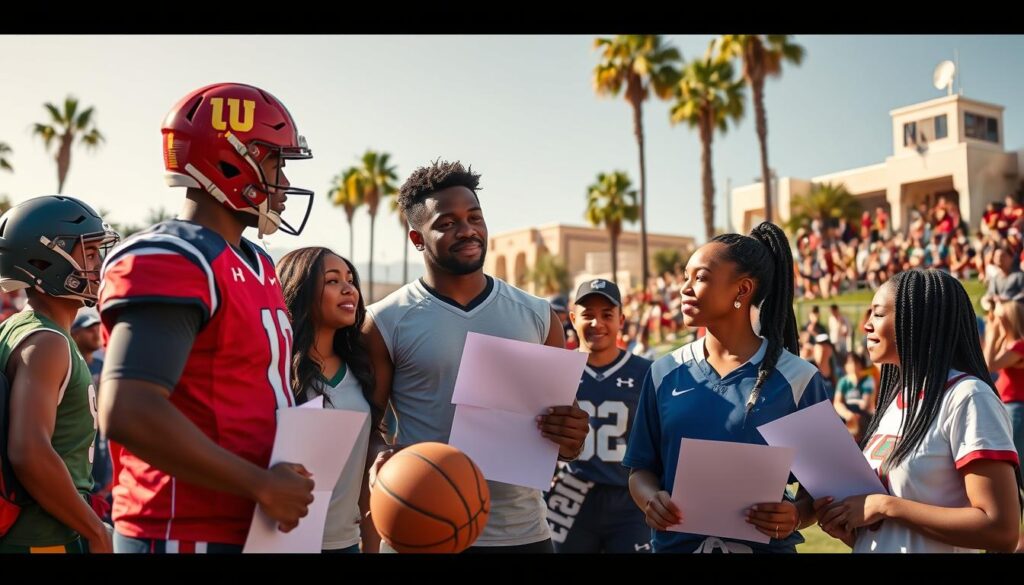
The plan for this hierarchy is clear. UC Berkeley’s settlement shows the priorities. The numbers highlight the stark differences.
| Sport | Total Allocation | Estimated Per Player | The Narrative |
|---|---|---|---|
| Football | $12 Million | ~$100,000 | The revenue engine gets the premium fuel. |
| Men’s Basketball | $3 Million | ~$200,000 | Smaller roster, bigger individual slices. |
| Women’s Basketball | $1 Million | ~$60,000 | A historic, guaranteed floor—but the ceiling? |
This unequal payout is a big issue. Now, let’s meet the residents.
The Football Franchise Player. Here, players get a base salary. But, stars at USC NIL earn more from collectives and endorsements. Their NIL is like a pro brand.
The Basketball Brand Mogul. With smaller teams, players can earn a lot. At UCLA or USC, they build a lifestyle brand. The UCLA NIL scene offers unique chances, with big third-party deals.
The Women’s Hoops Pioneer. This is a big change. Cal’s direct payments are historic. But, the gap with men’s sports is a challenge and opportunity.
The Olympic Sport Hustler. This is the basement, but it’s lively. Swimmers and gymnasts face a different path. Their NIL is in niche endorsements. Personal brands are key for them.
In California, there are four NIL games. Football and men’s basketball have big money. Women’s basketball has guaranteed stakes. Olympic sports are a grassroots hustle. Knowing which game you’re watching helps understand it all.
Donor and business involvement trends
Donor behavior in California is changing, thanks to new rules and smart business thinking. Gone are the days of random donations. Now, we see a shift towards organized, professional groups. It’s like moving from a single donor to a whole marketing team.
This change isn’t just about being kind. It’s a response to new laws. A key law in July 2025 aimed to stop unfair deals and ensure fair value. It told donors: get organized or leave.
Businesses now see college athlete endorsements as a real marketing tool. They want to know how it works, not just for the love of the game. They look for results, not just good vibes.
In the Bay Area, we see a big change. Gone are the days of simple cash deals. Now, we have content creation and brand matching. It’s all about making smart, lasting connections.
Long-term deals are the new norm. Brands want athletes for more than just a quick post. They want ongoing partnerships that work for everyone. It’s a more stable, but less wild, scene.
For old-school boosters, things have changed. They’re now investors in a marketing world. Their money funds professional teams that work with athletes in a clear, legal way. It’s about showing value, not just giving money.
This shift has created a new order. Bay Area collectives that follow the rules are leading the way. Those who don’t are falling behind. It’s a more serious, but less exciting, time for everyone involved.
The end result is a more stable, but less exciting, world. The wild days are over. Now, it’s time for grown-ups to run the show.
Impact on recruiting and the portal
Forget the playbook. The new recruiting manual is a balance sheet, and California schools are learning to be investment bankers. The game has shifted from selling tradition to presenting a business plan.
The transfer portal is no longer just a list of names. It’s a fully functional marketplace. Name, Image, and Likeness (NIL) is the currency that fuels every transaction.
For a top recruit, the ultimate pitch is a package deal. It combines the school’s direct salary with a vetted, lucrative endorsement deal from a collective. This one-two punch is how programs compete in this hyper-fluid transfer environment.
Source data notes that these third-party NIL deals have “driven recruiting and transfer activity.” Coupling them with direct payments allows for “total team compensation valued well into eight figures.” That’s a powerful sales pitch.
This new economy creates fascinating internal dynamics. Does a star freshman get a bigger package than a senior role player? How do you manage a locker room when compensation is transparently unequal?
Coaches are now de facto general managers. They must be salary cap wizards, balancing roster construction against a hard cap (the $20.5M in direct school pay) and a soft cap (the unlimited, but variable, firepower of their collectives).
The strategy for USC NIL operations differs from the approach for UCLA NIL collectives. One might focus on high-profile, brand-aligned deals for five-star recruits. The other may build depth through smaller, consistent deals for the entire roster. This table breaks down the new recruitment calculus:
| Component | The Old Pitch (Pre-NIL) | The New California Package | Recruiting Impact |
|---|---|---|---|
| Core Offer | Scholarship, Playing Time, Legacy | Base Scholarship + Direct University Salary | Meets immediate financial need; a guaranteed floor. |
| Value-Add | Facilities, Coaching, TV Exposure | Pre-negotiated Collective Endorsement Deals | Projects future earnings; sells marketability. |
| Role of Coach | Head Coach, Mentor | General Manager, Roster Architect | Trust shifts to ability to manage payroll and team chemistry. |
| Portal Strategy | Fill Roster Holes | Acquire Specific “Assets” for Immediate ROI | Transfers are now targeted free-agent signings. |
Recruiting isn’t just about stadiums and uniforms anymore. It’s about presenting a compelling, multi-year financial projection. Can your UCLA NIL collective connect a defensive lineman with a local car dealership? Does your USC NIL network have tech startups ready to sign a quarterback?
The schools that master this dual-cap system—the hard university budget and the soft collective war chest—will win the offseason. Everyone else is just reading an old manual.
How to track NIL news responsibly
Forget box scores; the real game in California college sports is now played in press releases and regulatory filings. The NIL landscape shifts faster than a TikTok trend, leaving fans drowning in announcements, rumors, and pure hype. How do you separate the signal from the noise without a decoder ring?
First, apply the sniff test. Be deeply suspicious of any round-number deal announcement lacking specific details. The state’s “commensurate compensation” rule exists to vaporize those vague, inflated figures. If it sounds too good to be true and lacks a paper trail, it probably is.
Your new scoreboard isn’t on ESPN. It’s in the memos from the College Sports Commission (CSC) and the approval logs of the NIL Go clearinghouse. These regulators are setting the actual rules of the road. Federal watchdogs, spurred by that recent Executive Order, are also entering the fray. Follow their moves, not the team’s social media.
Next, keep one eye on the courts. Legal challenges around Title IX implications and athlete employment status will reshape the entire California NIL law framework. For gold-standard intel, watch for the disclosures that will eventually flow from California’s public universities regarding their direct payments. That data cuts through the collective spin.
Why is there so much spin? Follow the incentives. A significant portion of the NIL “news” ecosystem is driven by entities that benefit from hype: collectives fundraising, agents recruiting clients, and schools boosting their brand. Their press releases are marketing tools, not financial disclosures.
Responsible tracking means ignoring the highlight reel and following the money trail. It turns you from a passive consumer into an analyst. And while you’re analyzing roster moves fueled by new deals, you’ll need the best score and stream apps for California to see the on-field results. The real story is rarely in the headline. It’s in the filing.
Outlook for the next 12 months
Get ready for a wild ride in college sports. The next year will be full of legal and financial twists and turns. First, keep an eye on Washington. The federal government will respond to the President’s Executive Order by next August.
Then, the courts will take center stage. Title IX appeals could change how we think about gender equity and backpay. The College Sports Corporation (CSC) will also start enforcing rules, making things clearer for groups like UCLA NIL and Bay Area collectives.
There’s a big question hanging over everything: will athletes be seen as employees? If they are, it could change everything. The market is already looking at a $3 valuation, but new rules could slow things down. Purdue, for example, has built a big roster under these uncertain conditions.
The future looks uncertain and full of challenges. There will be more lawsuits and a push toward professional sports. In California, where business is king, athletes are already seen as entrepreneurs.