
Cal State LA Basketball has turned to one of Los Angeles’ most recognizable basketball figures, and the move carries more than a familiar name. Michael Cooper was appointed head coach of the Golden Eagles men’s program on April 8, 2026, giving the school a leader whose career connects NBA championships, college coaching, pro women’s basketball, and a growing campus standard in University Hills.
For a local program trying to keep momentum from a record-setting stretch, Cooper’s promotion is not a ceremonial hire. He had already spent three seasons as associate head coach at Cal State LA, and he was part of the staff during the 2023-24 season, when the Golden Eagles posted a program-record 24 wins and captured their first California Collegiate Athletic Association Tournament championship. That recent success gives his first head coaching year a clear point of reference: the next step is about sustaining standards, not starting from scratch.
Cal State LA Basketball Raises The Bar
Cal State LA Basketball And The April 8 Hire
Cal State LA announced Cooper as its men’s basketball head coach on April 8, 2026, naming him the 14th head coach in program history in the school’s official announcement. That number matters for a program with its own identity inside a crowded Southern California sports market. The Golden Eagles are not trying to copy the Lakers, the Clippers, USC, or UCLA. They are trying to make their campus gym feel like a place where students, alumni, neighborhood families, and local players see a serious Division II program with postseason goals.
For Cal State LA Basketball, Cooper’s hiring also protects continuity. A new coach often brings a reset, but this promotion keeps a familiar voice near returning players and staff. Cooper already knows the demands of the CCAA, the travel rhythm, and the type of roster depth needed for a league tournament run. His task now is to turn that knowledge into a head coach’s plan: daily practice standards, late-game decisions, recruiting priorities, and a style that fits the players on campus.
A Promotion With Local Weight
Cooper’s name carries unusual weight in Los Angeles because his basketball life has so many local touchpoints. He played for the Lakers from 1978 to 1990, was part of five NBA championship teams, and earned NBA Defensive Player of the Year honors in 1987. He later coached the Los Angeles Sparks, with two WNBA championships in 2001 and 2002, and also had a college stop with USC women’s basketball. That background does not guarantee wins at Cal State LA, but it gives the Golden Eagles a coach who understands how much basketball means across the city’s neighborhoods.
The local angle is especially important for recruiting and attendance. Southern California produces high school and junior college players who want development, minutes, and a real connection to the coach recruiting them. Cooper can speak from experience as a player, assistant, and head coach across several levels. For parents and high school coaches, that kind of résumé can open the first conversation. The follow-through will still come down to player fit, academic support, and whether the Golden Eagles can keep building a reliable home-court setting.
What Cooper Brings To The Golden Eagles
Defense, Discipline, And Daily Standards
Cooper’s basketball reputation begins with defense. His best-known NBA honor came on that side of the floor, and his Hall of Fame selection put a national stamp on a career built on winning roles, matchups, and team habits. Cal State LA noted that Cooper was inducted into the Naismith Memorial Basketball Hall of Fame on Oct. 15, 2024, in its Hall of Fame announcement. For a college team, that defensive identity can show up in smaller but decisive ways: sprinting back after misses, contesting without fouling, calling coverages early, and finishing possessions with rebounds.
Cal State LA Basketball now has a head coach whose career offers a clear message to players: winning roles matter. Not every college athlete becomes the top scorer, and not every night is built around a clean shooting line. Cooper’s background gives him a natural platform to value the guard who takes a charge, the wing who guards the best scorer, and the big who sets firm screens. Those plays can decide CCAA games just as much as highlight finishes.
The Five Ds In A College Locker Room
At his introductory press conference, Cooper emphasized five Ds: determination, dedication, desire, discipline, and decision-making. The phrasing is simple enough for players to repeat, but the test comes during hard weeks. Determination shows up after a poor shooting night. Dedication shows up during film sessions and conditioning. Desire is measured in loose balls and transition effort. Discipline matters when the scouting report says no middle drives or no second-chance points. Decision-making sits inside every late-clock possession.
That structure can help a roster hear the same message from October through March. College teams deal with class schedules, injuries, travel fatigue, and changing roles. A clear set of team terms gives a coach common language. It also gives players a way to hold each other accountable without turning every correction into a speech. If Cooper’s first teams absorb those habits, the Golden Eagles should have a clearer identity regardless of opponent or venue.
Championship Culture Has A Campus Footprint
Fan Engagement Starts Close To Home
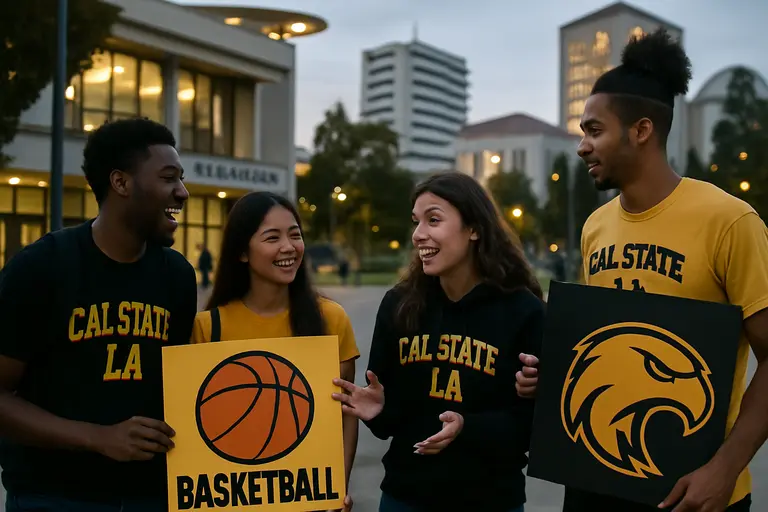
Cooper has stated goals tied to championship culture, community ties, fan engagement, and fundraising. Those ideas can sound broad, but at a commuter-heavy public university, they need practical form. Students need reason to stay for a weeknight tipoff. Alumni need a schedule worth circling. Youth teams in East Los Angeles and surrounding communities need invitations that make the Golden Eagles feel accessible. Local businesses need to see game nights as a campus event, not just another line on the calendar.
That work sits beside the basketball. A stronger crowd can help late in conference games. Better fundraising can support travel, equipment, and recruiting visits. More visible outreach can help the program become part of the local sports routine for families who already follow high school tournaments, Lakers games, Sparks games, and college hoops across the region.
Player Development Could Be The Selling Point
The strongest pitch may be development. Cooper’s career gives him examples from the locker room, the bench, and the head coach’s chair. He can talk to guards about defensive angles, wings about role acceptance, and entire teams about championship habits. Still, development has to be shown daily. Recruits and returning players will judge the new era by practice detail, playing time clarity, strength work, and whether the staff helps athletes improve from one season to the next.
That is where the 2023-24 season remains valuable. The Golden Eagles have already shown that the program can win at a level it had not reached before. The challenge is to make that season a foundation rather than a peak. Cooper’s promotion gives the school a coach with name recognition, but the program’s future will be shaped by roster construction, defensive buy-in, and how quickly players trust the system.
Why Cal State LA Basketball Matters In Los Angeles
A City Name With A Campus Job
For Cal State LA Basketball, Cooper’s hire brings a citywide story back to a campus setting. Los Angeles basketball is often framed through pro arenas and national broadcasts, but college sports here also live in smaller gyms, family sections, student sections, and recruiting relationships that start before a player becomes widely known. Cooper’s arrival gives the Golden Eagles a sharper spotlight, and the program now has to turn attention into attendance, support, and wins.
The most meaningful part for local fans is the chance to watch a Hall of Famer try to build something in real time. Not from a distance, and not as a guest speaker, but through practices, scouting reports, conference games, and postseason pressure. If the Golden Eagles keep defending, keep recruiting the right fit, and keep the campus connected, Cooper’s first seasons could become a defining stretch for one of Los Angeles’ own college programs.