
California sports fans already understand momentum. They see it every fall when a college football team turns a rivalry win into a conference surge, when an NFL defense starts closing games like it owns the fourth quarter, or when a postseason race suddenly feels different after one result that nobody can stop talking about.
That is why the build toward World Cup 2026 should feel more familiar than foreign.
Soccer may not use downs, drives, or two-minute warnings, but the emotional logic of a season run-in looks a lot like a playoff chase. Every dropped point changes the table. Every late mistake reshapes the story. Every manager’s decision becomes a talking point for days. For California fans preparing for World Cup matches in Los Angeles and the Bay Area, that is the bridge: soccer momentum works like playoff pressure, only with a global crowd watching every touch.
A recent Premier League example made the lesson obvious. Manchester United’s 2-2 draw at Bournemouth became more than a single result because it exposed the thin line between control and collapse during a season run-in. The match showed how one afternoon can reveal deeper questions about form, defensive stability, late-game management, and whether a team is built to survive pressure. That is exactly why Premier League season run-in pressure is such a useful lens for California fans looking ahead to World Cup 2026 odds and predictions.
The same ideas will matter when the World Cup arrives in California.
California Is About To Become A World Cup Pressure Stage
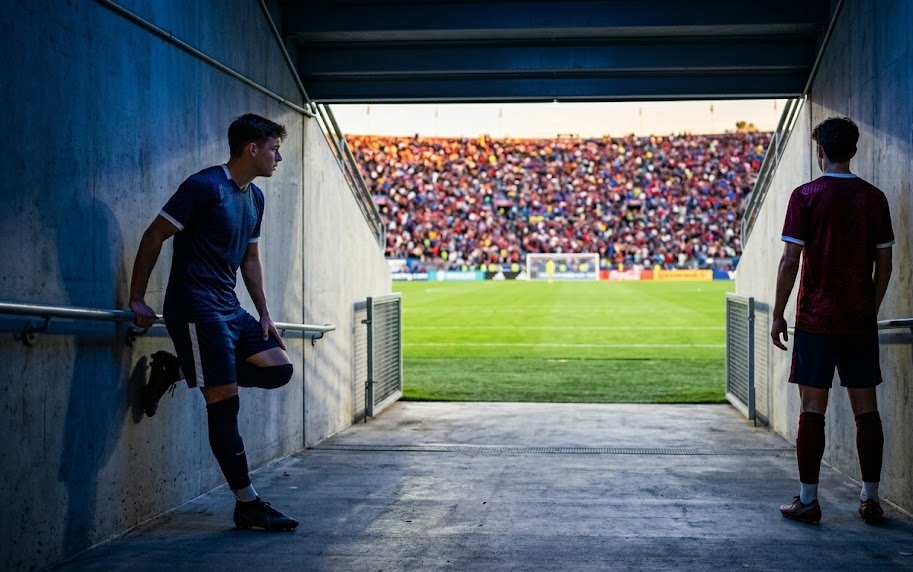
World Cup 2026 is not just another soccer tournament passing through the United States. It is the largest men’s World Cup ever, stretched across the United States, Mexico, and Canada, with California playing a major role in how American fans experience the event.
Los Angeles will host matches at SoFi Stadium in Inglewood, while the San Francisco Bay Area will host matches at Levi’s Stadium in Santa Clara. For fans used to USC, UCLA, the Rams, Chargers, 49ers, Lakers, Dodgers, Warriors, and California high school championship weeks, the venue names already carry meaning. These are not neutral spaces in the local imagination. They are stages where pressure feels loud, visible, and communal.
That matters because World Cup soccer is built on compression. A team does not get 82 games to figure itself out. It does not get a 17-game NFL season to recover from a bad month. It gets three group-stage matches, then knockout soccer if it survives. In that format, momentum is not a cliché. It is often the difference between a national celebration and a plane ride home.
| California World Cup 2026 Stage | Why It Matters For Fans |
|---|---|
| SoFi Stadium, Inglewood | Brings World Cup pressure into one of America’s most modern football venues |
| Levi’s Stadium, Santa Clara | Gives Bay Area fans a direct tournament role in a 49ers-linked venue |
| Group-stage matches | Create fast pressure where one result can change everything |
| Knockout matches | Turn every mistake, substitution, and late chance into a defining moment |
The reason California fans should care is simple: World Cup 2026 will not feel like a distant international event. It will feel like a statewide sports moment.
Why A Soccer Run-In Feels Like A Playoff Race
The phrase “run-in” is common in European soccer. It refers to the final stretch of a league season, when the table tightens, mistakes become louder, and every result begins to carry consequences beyond the scoreboard.
For California football fans, the closest comparison is the playoff race. Think of an NFL team fighting for seeding in December. Think of a college football contender trying to avoid one damaging loss before selection debates begin. The sport changes, but the psychology does not.
Teams in a run-in are judged by the way they handle stress. Can they protect a lead? Can they respond after conceding? Can they win ugly? Can they manage fatigue, travel, injuries, and outside noise?
That is why the Manchester United-Bournemouth draw is a useful soccer case study for California fans. United did not lose, but the draw still carried weight because the timing mattered. In late-season soccer, a draw can feel like a missed field goal, a blown fourth-quarter lead, or a red-zone trip that ends with nothing. The result itself is only part of the story. The bigger question is what it says about the team’s ability to close.
World Cup group-stage soccer works the same way. A draw in the first match may be survivable. A draw after missing chances can feel costly. A draw after losing control late can change the tone around a team overnight.
The USMNT Will Face The Same Momentum Test In California
When the United States plays World Cup matches on home soil, the conversation will not only be about talent. It will be about emotional control.
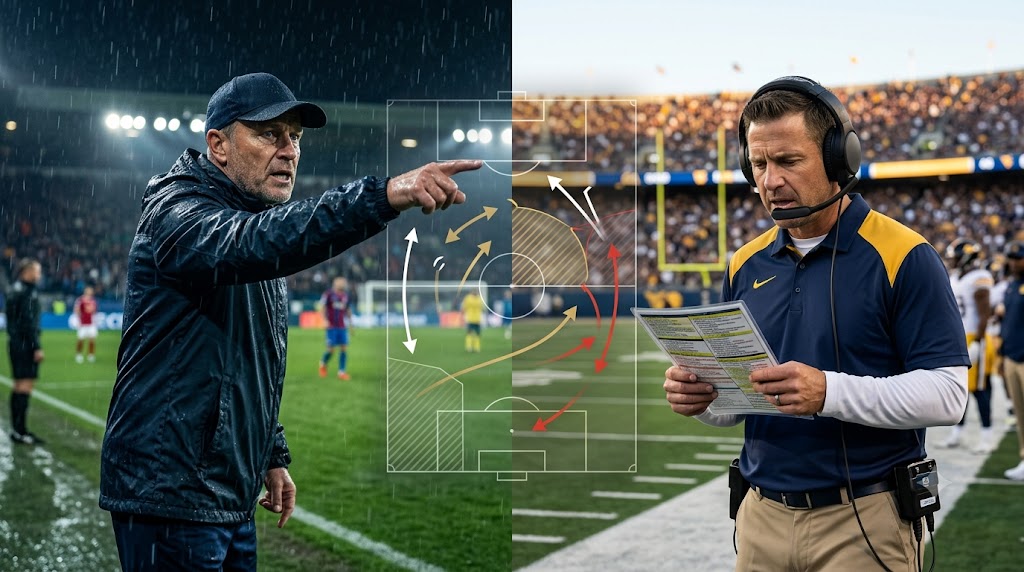
That is where California fans should pay close attention. A home World Cup creates energy, but it also creates burden. The crowd is behind you, the market is watching, and the expectation is not subtle. Every missed chance becomes a national debate. Every substitution gets dissected. Every defensive lapse becomes a warning sign.
American sports fans know this rhythm well. It is the quarterback who starts hot, then has to prove he can answer after halftime. It is the basketball team that leads by 14, then suddenly has to survive a run. It is the college program that looks unbeatable until one sloppy Saturday makes everyone question the foundation.
The U.S. men’s national team will need more than talent in California. It will need tournament management: knowing when to press, when to slow the game, when to absorb pressure, and when to turn a nervous crowd back into a weapon.
For local fans tracking match windows, broadcast details, and statewide viewing angles, our California sports TV and streaming schedule is the kind of resource that fits naturally into the buildup. World Cup 2026 will not only be a stadium event. It will be a statewide sports calendar event.
Momentum Is Not Just About Winning Streaks
One mistake American fans sometimes make with soccer is reducing momentum to wins and losses. In a tournament, momentum is more layered than that.
A team can build momentum from a draw if it survives a difficult matchup, fixes a tactical issue, or watches a young player grow into the stage. A team can lose momentum in a win if the performance looks unstable, the defense gets exposed, or the attack depends too much on one player.
That is why soccer analysis often feels more forensic than simple standings talk. It looks at patterns: possession control, chance quality, defensive transitions, substitutions, emotional response, and whether the team looks sharper or more fragile as the pressure rises.
California fans already do this in American football without always naming it. A 27-24 win can feel worrying if the offensive line gets bullied. A 20-17 loss can feel encouraging if a young quarterback handles pressure well. A rivalry game can change the entire emotional read of a season even if the standings barely move.
World Cup soccer is built for that kind of interpretation.
What California Fans Should Watch During World Cup 2026
The best way for California fans to watch World Cup 2026 is not just to follow the ball. It is to follow the pressure.
Watch how teams respond after scoring first. Some grow calmer. Others become passive. Watch how a coach changes shape after halftime. Watch how a favorite reacts when an underdog refuses to disappear. Watch whether a team’s best players demand the ball late or fade when the match gets tight.
That is where the playoff comparison becomes useful. Momentum is not magic. It is usually the visible result of repeated small advantages.
A team that wins second balls is building momentum. A midfield that stops counterattacks early is building momentum. A goalkeeper who settles the back line after a dangerous spell is building momentum. A striker who keeps pressing after missing a chance is building momentum.
In American football language, it is field position, time of possession, third-down confidence, and late-game composure. In soccer language, it is territory, tempo, spacing, transition control, and chance creation. Different vocabulary, same emotional heartbeat.
| Playoff Football Concept | World Cup Soccer Equivalent |
| Winning field position | Controlling territory and tempo |
| Protecting a fourth-quarter lead | Managing a one-goal advantage late |
| Third-down execution | Creating and finishing high-value chances |
| Defensive stop after turnover | Stopping counterattacks before they become shots |
| Halftime adjustment | Tactical shape change after pressure builds |
For California fans, this makes World Cup soccer easier to read. The sport may flow differently, but the pressure points are familiar.
Why This Matters Beyond Soccer Diehards

World Cup 2026 gives California a rare sports crossover moment. Casual soccer fans, NFL fans, college football fans, basketball fans, and local families will all be pulled into the same global event. That means the tournament has to be understood through familiar sports instincts, not just soccer jargon.
The Premier League run-in gives fans a useful preview because it shows how soccer creates drama over time. A single draw can reshape a mood. A single mistake can follow a team into the next week. A single late goal can change whether a club looks composed or vulnerable.
World Cup 2026 will compress that drama into a shorter, louder window. The group stage will feel like a three-game season. The knockout rounds will feel like sudden death. The California matches will carry local atmosphere, global attention, and the kind of tension that turns neutral fans into invested ones.
That is why momentum should be the word California fans keep in mind. Not hype. Not noise. Momentum.
It is the same force that makes a fourth-quarter stop feel bigger than the box score. It is the same reason a rivalry win can lift an entire program. And when the World Cup comes to Los Angeles and the Bay Area, it may be the easiest way for California sports fans to understand what they are really watching.