
Let’s cut through the post-holiday haze. Forget the generic “team is back” press releases. I’m reviewing the opening week of local college basketball with the scrutiny of a film critic at a summer blockbuster premiere.
Was it all style, or is there substantive plot? We saw Stanford’s reloaded juggernaut, led by Haley Jones, crush Cal Poly 108-40 as Tara VanDerveer inched closer to history. We watched Cal’s gritty new identity under Mark Madsen take shape, even in a loss, behind Matt Bradley’s 21.
Saint Mary’s wants to prove last year was no fluke. The mid-major intrigue of USF’s Khalil Shabazz (31 points) and Santa Clara’s Josip Vrankic (24 points) adds compelling subplots. This is our cinematic “previously on…” for each program.
The WCC race, already simmering, gets its first real taste of Bay Area basketball flavor. The drama of the return to hardwood amid a COVID is just the opening scene.
Standings and NET/efficiency comparison
Fans often focus on win-loss records. But the NCAA Tournament selection committee looks at NET rankings and efficiency. Let’s understand what they mean.
In the Bay Area, early season games are key. They help shape a team’s NCAA Tournament chances. The “bubble battle” could be intense this season. A team’s efficiency can be its strength or weakness.
NET rankings are like the committee’s favorite spreadsheet. They mix game results, strength of schedule, and scoring efficiency. KenPom’s adjusted efficiency metrics are similar. Together, they show more than just win totals.
Let’s look at Saint Mary’s defensive rating. Is it really stifling? Early signs are mixed. They’re disciplined, but have they faced tough enough offenses?
Stanford’s offense is another story. Scoring points against weaker teams is one thing. But can they keep up a high adjusted offensive efficiency against stronger opponents? The answer lies in the numbers.
Nationally, teams like Michigan and Duke are showing high efficiency numbers. Our Bay Area teams face a tough test. They’re not just competing with each other; they’re up against a national standard.
Here’s a glimpse of what early polls might say about our teams:
| Team | Early NET Indicator | Key Efficiency Question | Bubble Vibe |
|---|---|---|---|
| Saint Mary’s | Defensive Focus | Can defense travel vs. top-50 offenses? | Solid, but not a lock |
| Stanford | Offensive Output | Is scoring efficiency sustainable? | Potentially volatile |
| Santa Clara | Balanced Attack | Who is the alpha in clutch metrics? | On the radar |
| USF | Pace & Space | Does their style create quality shots? | Needs signature wins |
| Cal | Rebuilding Metrics | Is there a statistical identity yet? | Long shot |
NET rankings by January can shape a team’s postseason. A few spots can mean the difference between a good seed and a tough battle.
So, when watching games, look beyond the score. Ask yourself:
- Is my team winning efficiently, or just winning?
- Are they boosting their metrics against quality opponents, or padding stats?
- Does their statistical profile have a fatal flaw the algorithm will punish?
The win-loss column is for casuals. The efficiency metrics are for realists. In bracketology, only realism matters. The early data is in. The whispers have started. Listen closely.
Game‑of‑the‑week preview and matchup notes
The real excitement this week is in the west, not the ACC drama. We have two games that could change the WCC race dramatically. One is a non-conference showdown with many storylines, and the other is a league game with upset possibilities. This guide will help you enjoy the most exciting 40 minutes.
he main event is Santa Clara at USF. It’s more than just a game; it’s a challenge to the current order. Santa Clara’s fast-paced offense is ready to prove its worth. USF, on the other hand, is fighting to keep its home-court advantage. It’s a battle between a contender and a team looking to upset—an intensity that fans who follow top-online-casino-games can relate to, where every move, risk, and calculated play can completely change the outcome.
The game’s key matchup is on the perimeter. Can USF’s guards stop Santa Clara’s quick attacks? The game’s pace is also important. Santa Clara likes to run, while USF wants to slow it down. The team that wins the battle of turnovers will likely win the game.
- Key Matchup: Santa Clara’s backcourt speed vs. USF’s defensive discipline.
- Tempo Dictate: Fast-break chaos or grind-it-out physicality?
- Pivot Point: Which coach makes the first major rotation shift when the runs come?
The other game is Saint Mary’s at Washington State. It’s a big game for Saint Mary’s, a chance to get a quality win. Washington State is fighting to protect its home and show they can handle Saint Mary’s’ efficiency. This game is a tough test for both teams.
Looking ahead, the Pac-12 teams have big games coming up. Stanford and Cal each have two games that will shape their conference standing. These games could reveal a lot about the teams’ chances in the postseason.
So, make sure you have time to watch the Bay Area’s double feature of basketball. One game will affect the WCC race, and the other will show the heart of a team with national dreams. You won’t want to miss it.
Coaching adjustments and rotation shifts
In the chess match of a basketball season, Bay Area coaches are making mid-game moves. They’re refining their teams after the initial weeks of setting their identity. The big questions now are who gets the ball in tight spots and who gets the coach’s attention after mistakes.
Tara VanDerveer at Stanford is playing the long game. She’s using her whole team to build depth for March Madness. Haley Jones’s return from injury has forced a lineup change, testing new combinations.
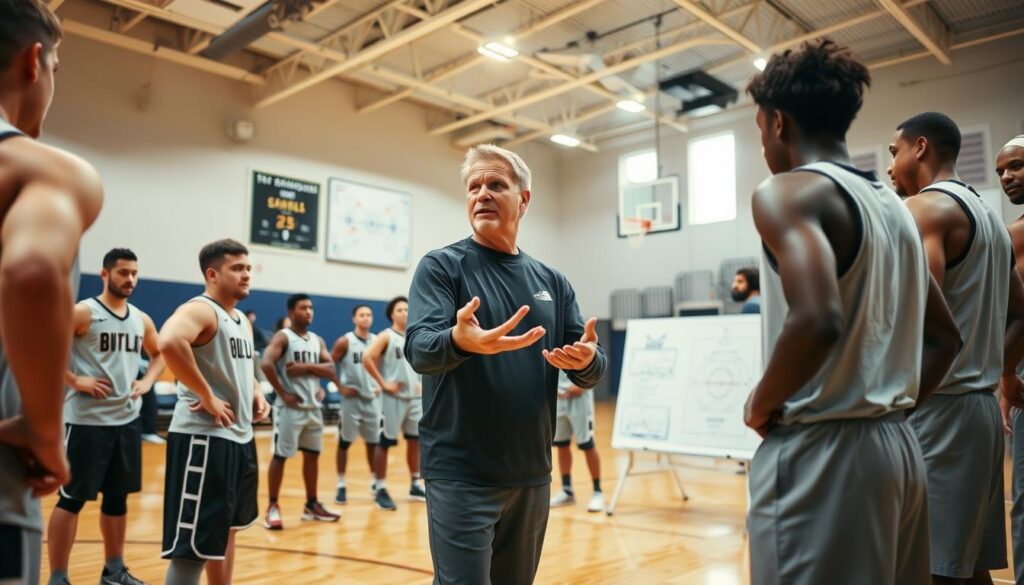
Mark Madsen at Cal is also experimenting. He’s trying out new players and systems, showing who fits his high-energy style. Randy Bennett at Saint Mary’s is tweaking his team before WCC play starts, making small changes to his lineup.
The minutes report tells a lot about a team’s strategy. Who plays in the final minutes shows a coach’s trust and strategy. Let’s look at the data that shows these changes.
| Team | Player | Role Change | Minutes Trend | Strategic Impact |
|---|---|---|---|---|
| Stanford | Cameron Brink | From spot minutes to key rim protector | ⬆️ Steady Increase | Unlocks switchable defense |
| California | Jalen Celestine | Sixth-man spark to closing lineup staple | ⬆️ Sharp Rise | Provides critical perimeter scoring |
| Saint Mary’s | Logan Johnson | Primary scorer to playmaking facilitator | ➡️ Steady (Role Shift) | Balances offensive load |
| USF | Khalil Shabazz | Volume shooter to selective scorer | ⬇️ Slight Decrease | Improves offensive efficiency |
| Santa Clara | Brandin Podziemski | Bench contributor to primary offensive option | ⬆️ Major Increase | Team’s offense runs through him |
Some players sit because they’re not fitting into the system. It’s not always about poor play. Coaches like Chris Gerlufsen at USF are teaching valuable lessons on the bench.
These changes are for the tough conference games ahead. The coaching adjustments we see now are like practice runs for the big games. They’re testing who can defend and who can score.
A coach’s rotation shows their priorities and fears. Giving a defensive specialist late-game minutes shows a fear of losing on a stop. Sticking with a cold shooter shows confidence. In Bay Area basketball, these signals tell us a lot about a team’s future. The chess game is on.
Bracket chances: locks, bubblers, and bid thieves
Stanford’s women are almost picking out their March hotel rooms. But the men’s side of Bay Area hoops is a different story. It’s full of ‘what ifs’ and ‘bad losses.’ The stakes are high, but the approach is different.
Is any local men’s team a lock for the Big Dance? Probably not. A true lock doesn’t worry about a bad loss in February. Every team is fighting for survival.
We’re in the bubble zone now. The bubble battle could get bloody this season. Teams like Saint Mary’s are hoping to stay in the running. Others, like Santa Clara or USF, are longshots needing a miracle.
The tournament’s boogeyman is the dreaded “bid thief.” Imagine a WCC team outside the at-large picture getting hot in Las Vegas. They could steal the automatic bid. This is a big threat to teams like Saint Mary’s.
Looking at the local picture, we see the bigger picture. When national talk is about ACC hoops, it means power conferences are getting bids. This leaves fewer bids for teams like those in the WCC. A strong non-conference win is key to getting noticed.
The next few weeks are critical. Teams are building a case for the selection committee. Every game matters. Want to track the most critical ones? Check out this week’s slate and broadcast info for the matchups that will make or break Bay Area bracket dreams.
Rivalries and local TV/stream guide
The heart of Bay Area basketball is in its rivalries. These aren’t just games; they’re a clash of pride and history. I’ll show you where to watch these epic battles.
The Stanford-Cal rivalry is legendary. It’s more than just wins and losses. It’s a battle of schools, played out on the court. This rivalry is a must-see, fueling the passion of local fans.
New rivalries are emerging, like Cal vs. Oregon State. It’s not just a game; it’s a battle for the future. The WCC’s round-robin is also intense, with Saint Mary’s, USF, and Santa Clara constantly vying for dominance.
Watching these games is easy. This guide will help you find the best Bay Area basketball games. No need to search; it’s all here.
- Stanford vs. Cal: The main event. Check your local Pac-12 Networks affiliate or the conference’s streaming app. This is appointment television.
- Cal at Oregon State: A developing rivalry with bubble implications. This one often lands on ESPN2 or the ESPN streaming suite.
- WCC Warfare (Saint Mary’s/USF/Santa Clara): Your home for these beautifully brutal contests is typically CBS Sports Network or ESPN’s digital platforms. The WCC’s own streaming service is also a reliable fallback.
- Local Broadcast Gems: Don’t sleep on NBC Sports Bay Area for certain non-conference or early-season replays. They provide the hometown color commentary.
Why choose between channel 612 and streaming? It’s all about the story. Watching Saint Mary’s take down USF is more meaningful with last year’s buzzer-beater in mind. Cal vs. Oregon State is intense, knowing a bid is at stake. This guide helps you understand the stories behind the games.
Players of the month from Bay Area teams
Do you know the names that are making waves in Bay Area basketball? It’s not about trophies. It’s about athletes who turn challenges into triumphs.
Their skills are key parts of the WCC race and Pac-12 battles. Who makes the game-changing plays? Who is their team’s heart?
Haley Jones is a standout at Stanford. She’s not just a scorer; she’s a game-changer. Her skills shift the game’s momentum.
Matt Bradley at Cal is a force to be reckoned with. He scores and draws defenses, creating space for others. He’s the team’s backbone.
Khalil Shabazz at USF is a hidden gem. He’s a master of hustle and making plays. He’s the heart of the Dons.
Josip Vrankic at Santa Clara is a seasoned player. He knows when to make his move, adding value to the team. His calmness is a game-changer.
Tiara Bolden at Oregon State is a reminder of brilliance beyond the Bay. She’s a benchmark for our local stars.
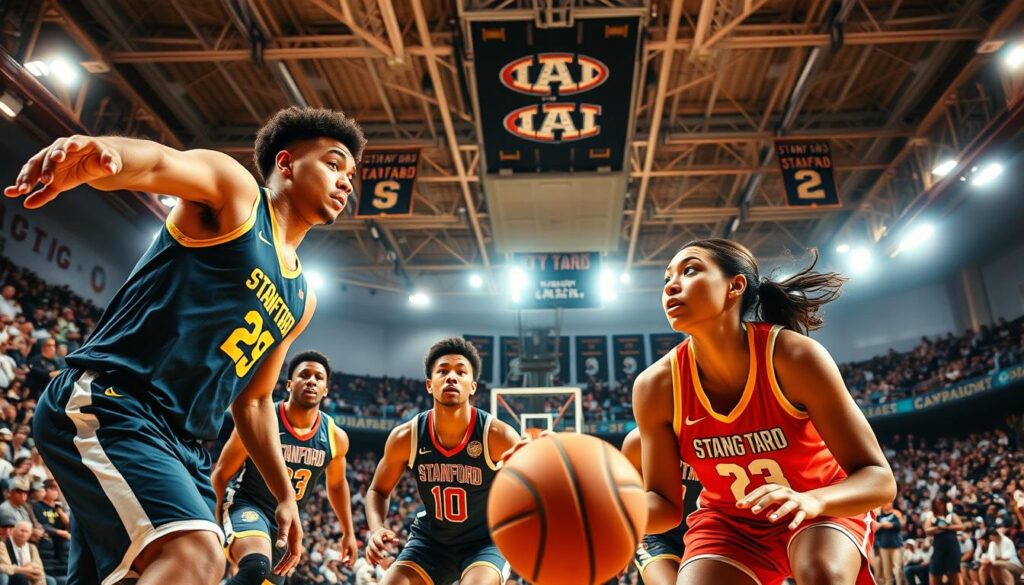
What do these players have in common? They’re more than just stats. They’re the heartbeat of their teams. Jones, Bradley, Shabazz, and Vrankic are the leaders.
Their individual efforts shape the season’s story. Watching the WCC race is watching them.
These players are the real MVPs of the month. They’re not just playing; they’re writing the season’s best stories.
What the next two weeks could decide
Think the season’s story is set? Think again. The next two weeks could change everything. We’ve looked at the data closely. Now, let’s see what the future holds for our local teams.
Saint Mary’s is at a crossroads. They’ve always been close to the top in the WCC race. Games against Gonzaga and San Francisco are more than just games. They’re chances to prove they’re contenders.
Cal and Stanford face a tough challenge. They’ll play against top teams early on. It’s not just about winning. It’s about showing they can compete with the best.
Momentum is everything in college basketball. A win can start a streak. A loss can lead to a downfall. We’re at a critical point where seasons can change.
Conference realignment is also on the minds of teams. Strong performances now matter more than ever. For teams in the shadow of the ACC hoops Bay Area, winning is not just for pride. It’s a strategic move for resources and relevance.
So, what’s coming up? Here are the games that will matter.
| Team | Pivotal Game | Date | What’s at Stake |
|---|---|---|---|
| Saint Mary’s | vs. Gonzaga | Dec. 2 | Command respect in the WCC race; secure a Quad 1 win. |
| California | vs. San Diego State | Dec. 5 | Prove mettle against a ranked, physical opponent early. |
| Stanford | @ North Carolina | Dec. 10 | A statement road win in an ACC hoops Bay Area measuring-stick game. |
| USF | vs. Boise State | Dec. 7 | Solidify non-conference resume before WCC play begins. |
| Santa Clara | @ Oregon State | Dec. 9 | Grab a road win against a Pac-12 foe to build confidence. |
For Santa Clara and USF, the goal is clear: win as many games as possible. Their upcoming games are chances to prove themselves. A strong start will silence doubters before conference play starts.
In the end, the next two weeks are a test. They will show who’s serious and who’s not. They’ll reveal which teams are ready for March and which might leave early. Get ready. The story is about to get more exciting.
Bay Area hoops history note of the week
Let’s go back to 2000, a time when dial-up internet was common and Bay Area basketball was full of drama. Napster was sharing music, “Survivor” was popular, and Y2K fears were fading. From that time, I found stories that feel like they came from another sports world.
Casey Jacobsen, a sophomore at Stanford, was a rising star in 2000. His profile from that time shows a player on the verge of greatness. The articles from then were full of hope for the team’s future.
Tara VanDerveer was also making history at Stanford, winning her 500th game. This milestone was just the beginning of her incredible journey. It’s amazing to see how these moments connect to today’s sports.
These stories from the past remind us of the present. The Cardinal men were building their legacy, just like today’s teams. VanDerveer’s 500th win was celebrated back then, and now we’re counting her 1,200th. The archives even mention Stanford football’s Big Game streak, showing how Bay Area sports are always connected.
This isn’t just looking back. It’s gaining perspective. Today’s dramas, like bubble anxiety and coaching changes, are just part of the story. Bay Area basketball has seen many stars and teams come and go. The 2000 Stanford team faced their own challenges, just like today’s teams at Cal, Saint Mary’s, or USF.
So, when you watch games this week, think about the echoes. Today’s young players and coaches have predecessors like Jacobsen and VanDerveer. History doesn’t repeat itself, but it loves to reference past moments. And in the Bay Area basketball story, every season adds to the rich, ongoing saga.
Reader questions and schedule tracker
Do you have a burning question about Bay Area basketball? Maybe it’s about a lineup change or a defensive strategy. Or perhaps you’re curious about my thoughts on late-game plays? This is your chance to ask.
Bracketology is a tough sport right now. Santa Clara is among the Last Four IN. California is also in the bubble conversation. Saint Mary’s is seen as an 8-seed, facing Clemson. USF is a 12-seed, set for a 5-12 game. For more bracket questions, check out this detailed Q&A.
Need a schedule tracker? You’re in the right place. Watch the seed lines move. Keep an eye on the bubble watch. Bay Area basketball’s landscape changes every day. Keep asking your questions. The conversation never stops.